
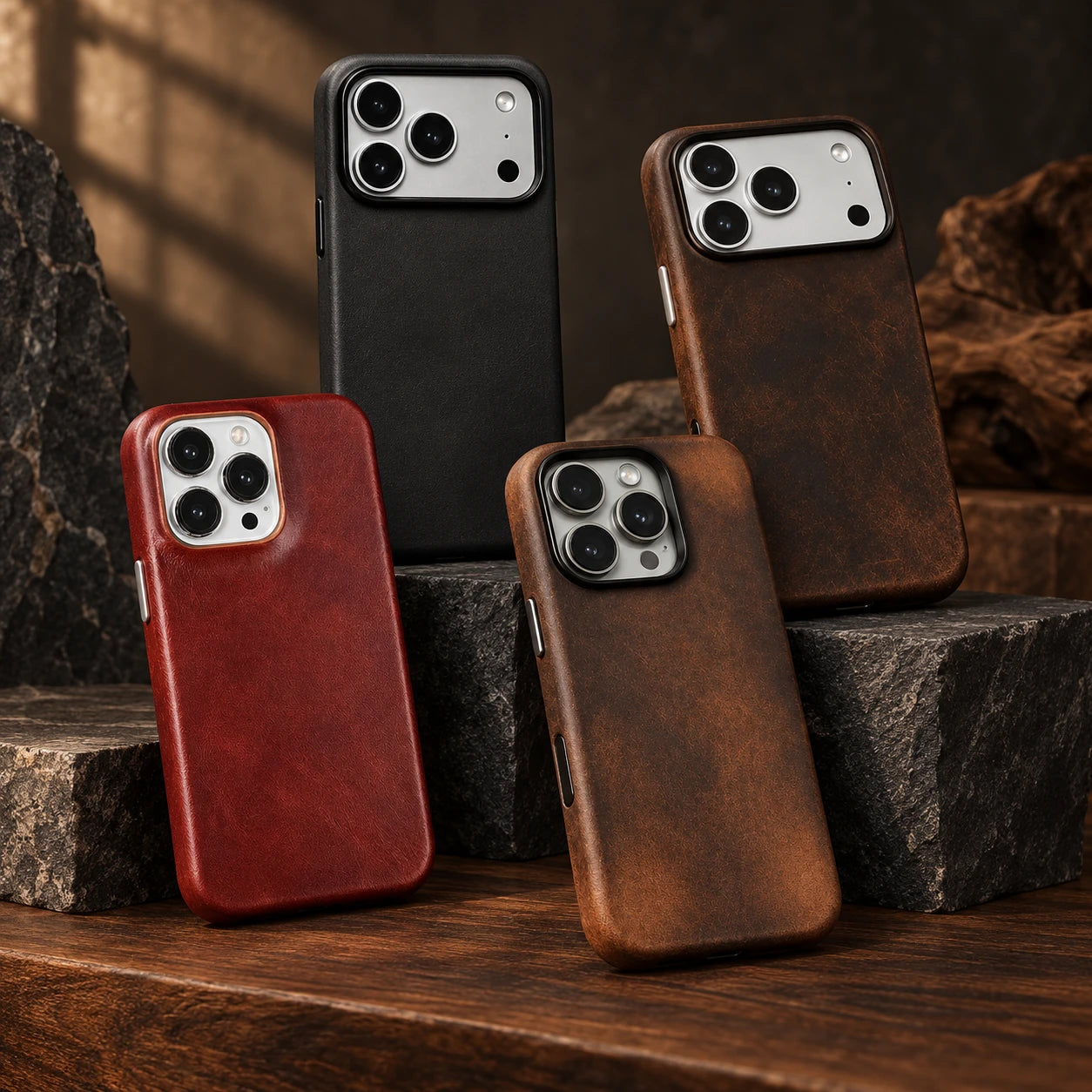






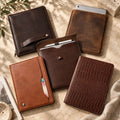

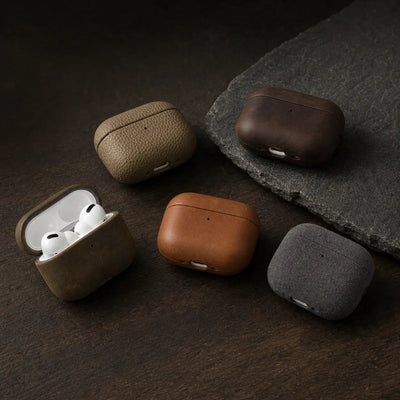
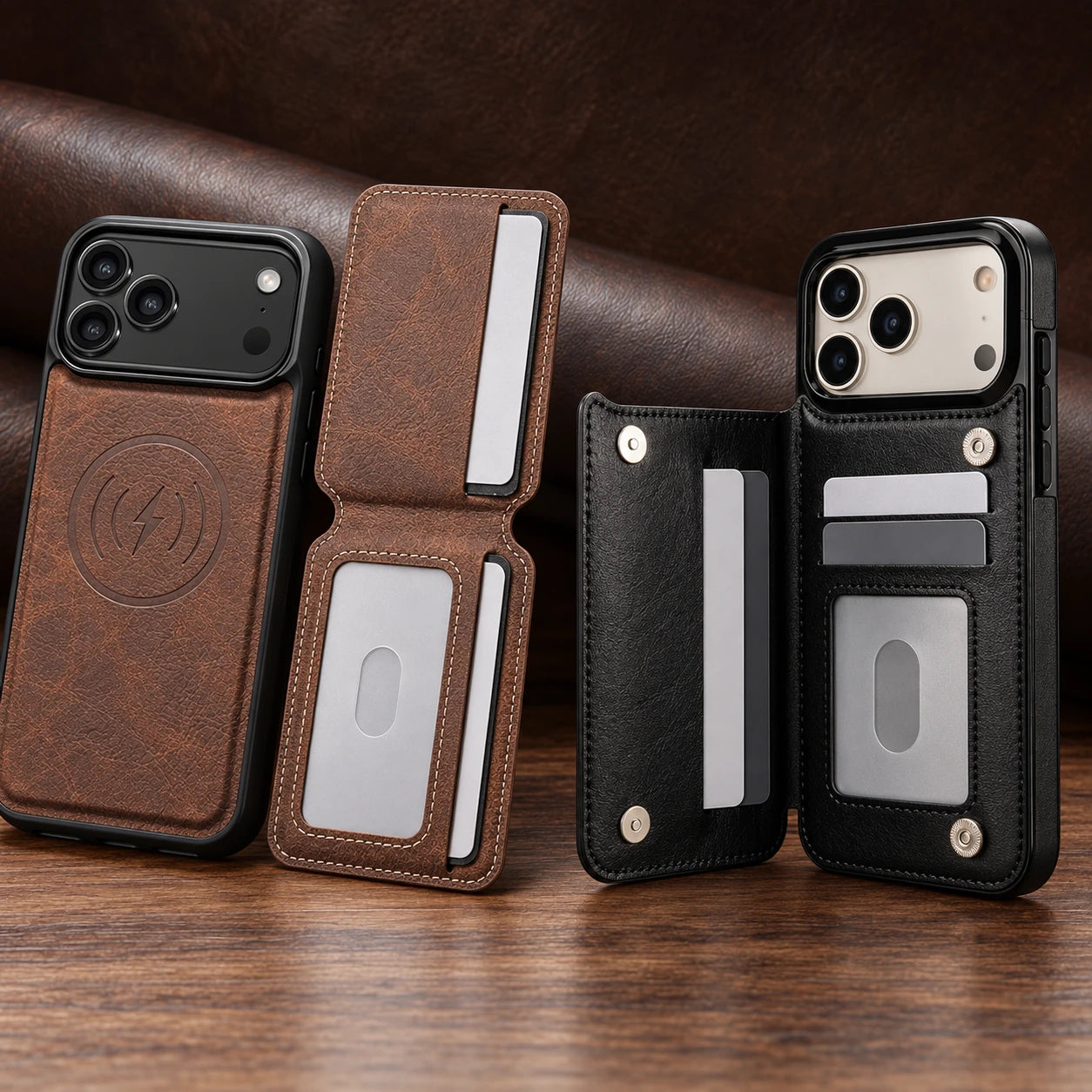
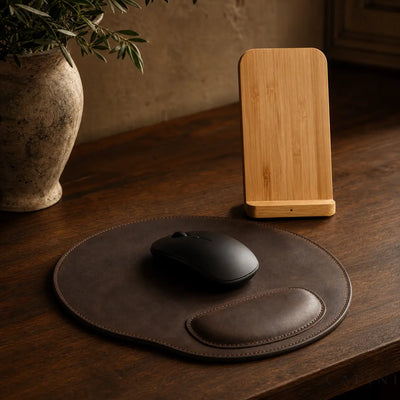

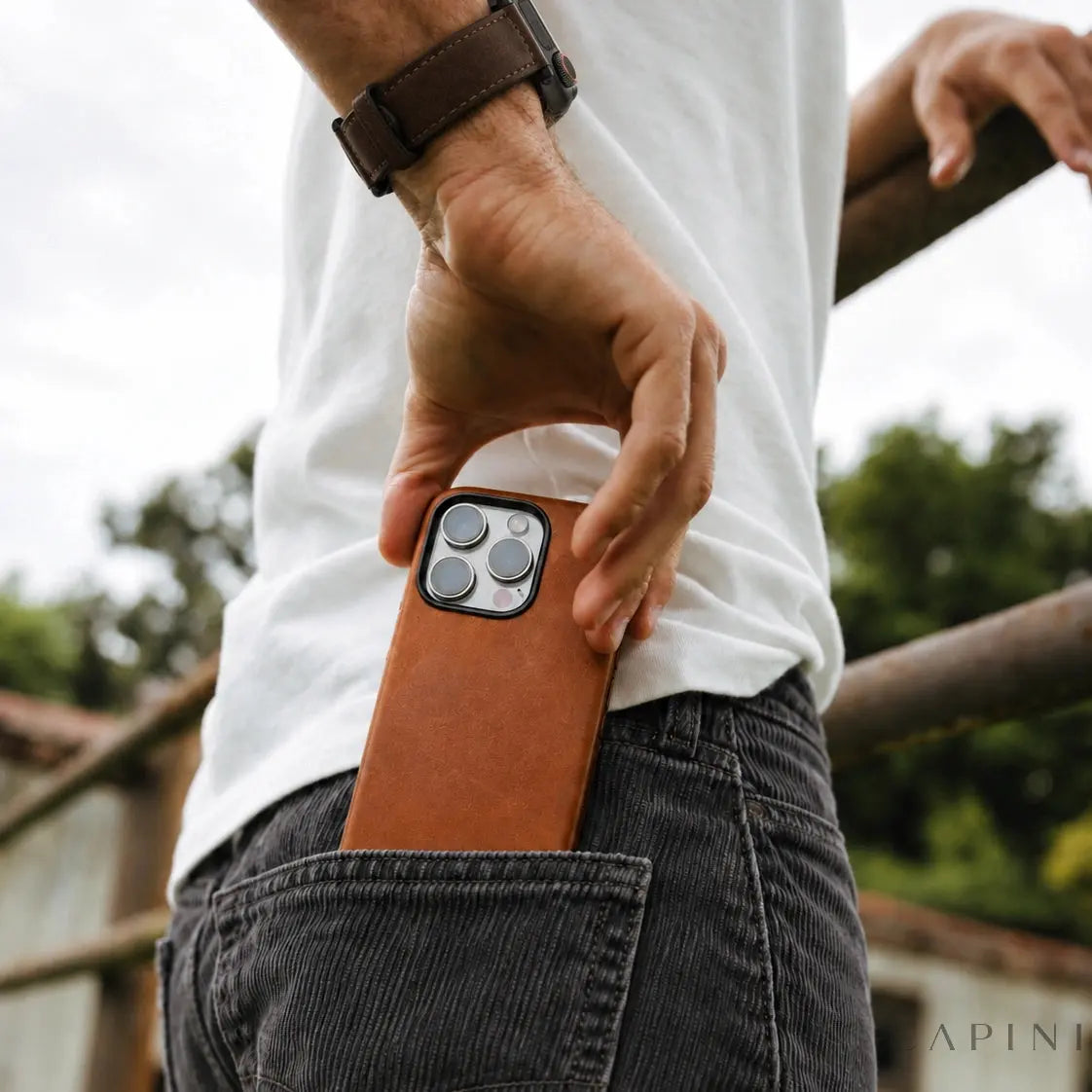
Carry a leather case every day and it changes. The colour deepens, the edges soften, the surface takes on a quiet sheen, and the marks of the first weeks slowly become part of the finish. That change is called patina. It is the main reason people choose real leather over plastic, and also the thing most likely to surprise someone buying their first leather case.
This guide explains what causes patina, how it differs between leathers, how to tell it apart from real wear, and whether a case that changes is right for you.
Patina is the gradual change in colour, sheen and texture that real leather develops through handling, friction and light. Your hands, your pockets and daylight darken and polish the surface, so the case ends up recording how you use it. It is not damage: the surface ages instead of wearing through.
- Patina comes from three things: the warmth and natural oils of your hands, friction, and light.
- It shows fastest on waxed and oiled leathers such as Crazy Horse (a finish on cowhide, not a type of animal), and slowest on smooth Nappa.
- Patina is a change of colour and sheen. Cracking, peeling and flaking are wear, not patina.
- You cannot stop patina on real leather, but you can keep it even: use the case, keep it clean, keep it away from heat.
- Alcantara and vegan leather, which is synthetic, are made to keep their colour. They do not develop patina.
What is leather patina?
The word comes from the film that forms on old bronze and copper. On leather it means the same idea: a surface that changes with age and use, and carries its history on it.
On a phone case, patina usually means three things. The colour gets deeper and richer. The surface goes from matte to a soft sheen where it is handled. And small scratches and scuffs stop looking like marks and start looking like texture.
Patina needs the natural surface of the hide. Full-grain leather keeps that surface: nothing is sanded off and nothing is printed on top. Leathers with a thick painted coating change far less, because your hands touch the coating rather than the leather. If you are not sure which grade a case uses, our guide to full-grain, top-grain and genuine leather explains the labels.
What causes patina on a leather case?
A phone case is handled more than almost anything else you own, which is why patina shows on it so clearly. Four things are at work.
- Your hands. Warmth and the natural oils of your skin are absorbed into the surface, so the places you hold darken first.
- Friction. Pockets, bags and tables burnish the leather. The fibres compress, edges soften and the surface starts to shine.
- Light. Daylight darkens leather over time. Vegetable-tanned leather is especially sensitive to it.
- The finish. In Crazy Horse, oil-wax and pull-up leathers, the waxes and oils move under pressure and warmth. That is why a mark can lighten, darken or blend back in.
Because all four depend on you, no two cases age the same way. How you carry it, where you live and how often you hold it all show on the surface.
What does patina look like over time?
Crazy Horse is the clearest example, because it changes fastest. On a Crazy Horse case carried every day, the pattern usually looks like this.
- The first days. The surface already responds to your hands. A customer in Italy noticed it on his Ferrara: "La pelle Mastrotto è davvero premium. Il crazy horse cambia tono dopo pochi giorni e diventa ancora più bello." (The Mastrotto leather is truly premium. The Crazy Horse changes tone after a few days and becomes even more beautiful.) Giulio M., Italy.
- The first weeks. The first scratches appear. Rubbed with a thumb, light ones blend back in. Others darken.
- Around three months. The scratch you made in week one has become part of the finish.
- Around six months. The corners you hold lighten first. The back darkens where it sits in a pocket. Early scuffs stop reading as damage and start reading as depth.

Other leathers follow the same direction, more slowly. Vegetable-tanned leather gets darker and warmer month by month. Nappa stays even and ages slowly and discreetly.
Which leathers develop patina fastest?
| Material | Speed | What changes | Our pieces |
|---|---|---|---|
| Crazy Horse | Fastest | Marks darken, colour deepens, held corners lighten | Ferrara, Siena |
| Pull-up | Fast where it flexes | Lighter at bends, darker where touched | Parma, Cremona, Ivrea |
| Oil-wax | Steady | Darkens, softens, sheen grows | Lucca, Torino |
| Vegetable-tanned | Steady, deepens with light | Deeper tone, softer glow | Copenhagen |
| Nappa | Slow | Stays even, ages discreetly | Napoli |
| Alcantara (not leather) | None | Keeps its texture and colour | Monaco GT, Monza |
| Vegan leather (synthetic) | None | Holds its colour | Lecce |

Colour matters too. The same leather can age in different directions depending on its shade. Our Ivrea MacBook sleeve shows it: in cognac, the pull-up leather lightens with use. In espresso, it deepens.

For a fuller explanation of each finish, read our guide to Crazy Horse, oil-wax, pull-up and Nappa.
Is patina the same as damage?
No. Patina is the surface ageing. Damage is the surface failing. The difference is easy to see once you know what to look for.
| Patina (normal) | Wear worth attention |
|---|---|
| Darker tone where you hold it | Cracks along folds or edges |
| A soft sheen on the back | A surface coating that peels or flakes |
| Light scratches that blend or darken | Cuts that go through the surface |
| Lighter colour where it bends | Stiff, pale, dry patches after heat |
| A shade that differs from a friend's case | Stains from ink or dyed fabric |
Leather that keeps its natural surface has no printed layer to come away. As our Ferrara page puts it, Crazy Horse does not fade or peel: it moves.
One edge case is worth knowing. On oil-rich pull-up finishes such as our Parma, frequent use of MagSafe chargers may leave a visible circular mark on the leather. It is a trait of the finish, not a fault, but if you want an even back, it is worth knowing before you buy.
Can you speed up, slow down or even out patina?
You can guide it, but not stop it.
- To speed it up: use the case. Carry it every day, hold it, and rub marks with your thumb. Do not use heat or chemicals to force it. Heat dries leather out.
- To even it out: rub the lighter areas with your thumb or a soft dry cloth. Uneven patina usually evens out as the whole case is handled.
- To slow it down: keep it clean and out of strong sun. It will still change, only more gently.
Be careful with conditioners. Most of them darken leather, sometimes unevenly. A soft cloth is all a leather case usually needs. Our leather care guide covers each finish.
Is a case that develops patina right for you?
Ask yourself one question: do you want the case to look the same in a year, or to look like yours?
- You want it to change, and quickly: Crazy Horse.
- You want warm, natural ageing: vegetable-tanned leather.
- You want leather that stays quiet: Nappa.
- You want no change at all: Alcantara, or vegan leather, which is synthetic. See our vegan leather collection.
If you carry more than one leather piece, choose the same leather for all of them. Pieces in the same leather age in the same direction, so they keep matching. See the matching set.

Frequently asked questions
How long does it take for patina to appear?
It depends on the leather and how much you use it. Crazy Horse can change tone within days. Vegetable-tanned leather deepens over months. Nappa changes very slowly.
Can I stop my leather case from developing patina?
Not on real leather. You can slow it by keeping the case clean and out of strong sun. If you want a look that stays the same, choose Alcantara or vegan leather.
Can I remove patina and make the case look new again?
No. Patina is a change in the leather itself, not a layer of dirt. Cleaning removes dust and marks on top of it, but the deeper colour and sheen stay.
Will my case look like the photos?
Every hide is different, and patina depends on how you carry and care for the case. No two cases age the same way, and that is the point.
Do Alcantara and vegan leather cases develop patina?
No. Alcantara is an Italian microfibre that keeps its colour instead of developing a patina. Vegan leather is synthetic and holds the colour you bought.
Is the circular mark from my MagSafe charger patina?
Not exactly. On oil-rich pull-up finishes, frequent MagSafe charging may leave a visible circular mark. It is a known trait of those finishes, which is why our Parma page says so. If you want the back to stay as even as possible, choose a different leather or use MagSafe charging less often.
Written by the Capini Firenze team. We work with these leathers every day and update this guide when our materials change.


Lämna en kommentar
Denna webbplats är skyddad av hCaptcha och hCaptchas integritetspolicy . Användarvillkor gäller.