





You have been invited to dinner and you want to bring a bottle. The questions arrive quickly. Red or white? How much should you spend? Will they open it? Should you have asked first?
Most of them get easier once you know one thing about etiquette: the wine you bring is not for tonight. This guide explains why, how to choose a bottle for the person rather than for the meal, and how to hand it over so it reads as a gift.
Bring one bottle you chose for the host, not for the menu, and treat it as a gift for another evening. Etiquette guides advise that the host does not have to open it, because the wines for tonight have usually been chosen already. Hand it over in person, say it is for them to enjoy later, and give it in something better than the shop's bag.
- The host has usually planned the wine for the meal. Yours is a gift for later.
- Do not expect your bottle to be opened, and do not ask.
- Choose for the person: a bottle you can say one honest sentence about.
- Know your host. If they do not drink alcohol, bring something else.
- How it arrives matters. A checkout bag says "I grabbed this on the way". A carrier says "I chose this for you".
Why is the wine you bring not for tonight?
A host usually plans an evening around the food. By the time you ring the bell, the wines for the table have been chosen, perhaps opened to breathe, perhaps chilled. A bottle that arrives at the door, at room temperature and unannounced, does not fit that plan easily. Nobody expects it to.
That is why etiquette guides advise treating the bottle a guest brings as a gift, in the same spirit as flowers or chocolates. It belongs to the host now, to open on an evening of their choosing.
This takes pressure off both of you. You do not have to match a menu you have not seen.
There is one exception. If the host asked you to bring wine for the meal, then it is for tonight. In that case ask what is being served, and bring it ready to pour, chilled if it needs to be.
Should you expect the host to open your bottle?
No. If the host opens it, take it as a compliment. If they put it aside, the etiquette is working as intended. It is not a snub.
What makes the moment awkward is the guest, not the host: asking whether it will be opened, watching where it goes, or suggesting it "would be perfect with this". Each of these turns a gift back into a contribution.
The easiest way to release the host is to say it out loud as you hand it over: "This one is for you, for another evening." One sentence, and they know they are free to keep it.
What wine should you bring to a dinner party?
Because the bottle is a gift, choose it for the person, not for the plate. A few principles do most of the work.
- A bottle you can say a sentence about. From a region you have visited, a grape they once mentioned, a producer a wine shop recommended to you. A reason is worth more than a famous label.
- A bottle that can wait. The host may keep it for a while. A wine that will still be good in a few months is kinder than one that must be drunk this week. If you are unsure, ask the shop for something that will keep.
- Red or white, without worry. Neither is wrong. A red needs nothing from the host when it arrives. A white or sparkling wine will need chilling before anyone enjoys it, which is fine when it is clearly meant for later.
- One good bottle rather than two random ones. The exception is a housewarming, where two bottles make sense: one for soon, one to keep.
- Something else, if they do not drink. If your host does not drink alcohol, or you are not sure, bring flowers or something for the home instead.

How do you choose a bottle by occasion and budget?
The occasion tells you more than the menu does. Use this as a starting point, then adjust for the person.
| Occasion | What to bring | Why it works | How to present it |
|---|---|---|---|
| First dinner at their home | One bottle with a short story behind it | Shows thought without asking anything of the host | A simple single-bottle carrier |
| Regular dinner with close friends | Something you would like them to try | They know your taste, so it becomes a conversation for next time | A carrier they keep for their own gifts |
| Housewarming | Two bottles: one for soon, one to keep | A new home has many first evenings ahead | A two-bottle tote |
| Thank-you or milestone | A bottle tied to a date or a shared memory | The gift marks the moment, not only the evening | An engraved carrier with names or a date |
| Someone who loves wine | A bottle worth waiting for | They will care about how it is opened and poured | A case with the tools to open it |
| Business dinner or client | A classic, uncontroversial choice | Keeps the gift professional rather than personal | A structured gift box, or engraved initials |
On budget, there is no rule that works for everyone. A useful test: spend what you would spend on a bottle you would happily open at home. A very expensive bottle can make a host feel they should open it tonight, or match it next time, which is the opposite of what a gift should do.
Whatever you spend, take the price sticker off. Often, how the bottle arrives says as much as what it cost.
How should you present a bottle of wine?
How the bottle arrives says something before anyone reads the label. A checkout bag says "I grabbed this on the way". A carrier says "I chose this for you".
- Remove the price and the receipt.
- Bring it covered. A carrier, a box or at least some wrapping. A bare bottle, or one in a thin plastic bag, looks like an errand.
- Hand it to the host. Not to the table or the kitchen counter. Wait for a quiet moment.
- Say one sentence. What it is, why you chose it, and that it is for another evening.
- Add a note if it is for a particular day. "For your first dinner in the new flat" helps the host remember who brought it and why.
- Then let it go. Where it goes next is their decision.

What are the most common mistakes?
- Bringing wine for the menu when nobody asked. It makes the host choose between your bottle and theirs.
- Arriving with something that needs attention now, such as a bottle for a fridge that is already full.
- Leaving the price on, or handing it over in the shop's bag with the receipt inside.
- Spending to impress. A gift should feel generous, not like a debt.
- Taking an unopened bottle home again. It was a gift. It stays.
Which wine carrier suits which occasion?
Our wine carriers are made for exactly this moment: the walk from your door to theirs. All five are vegan leather, a PU-coated synthetic surface, not animal hide. They wipe clean with a damp cloth and need no conditioning. They will not build a patina the way hide does; that is the trade. The bottle is not included.
The wine gets opened. The carrier stays with your host, for the next bottle they give.
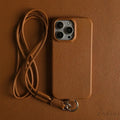
- Cormons: a single-bottle carrier folded from one panel and stitched down both sides, with a Loop Handle or a Window Front. The simplest way to arrive at a first dinner.
- Radda: a gift box for one bottle that opens like an envelope and folds flat when empty. Quiet and formal, good for a business dinner.
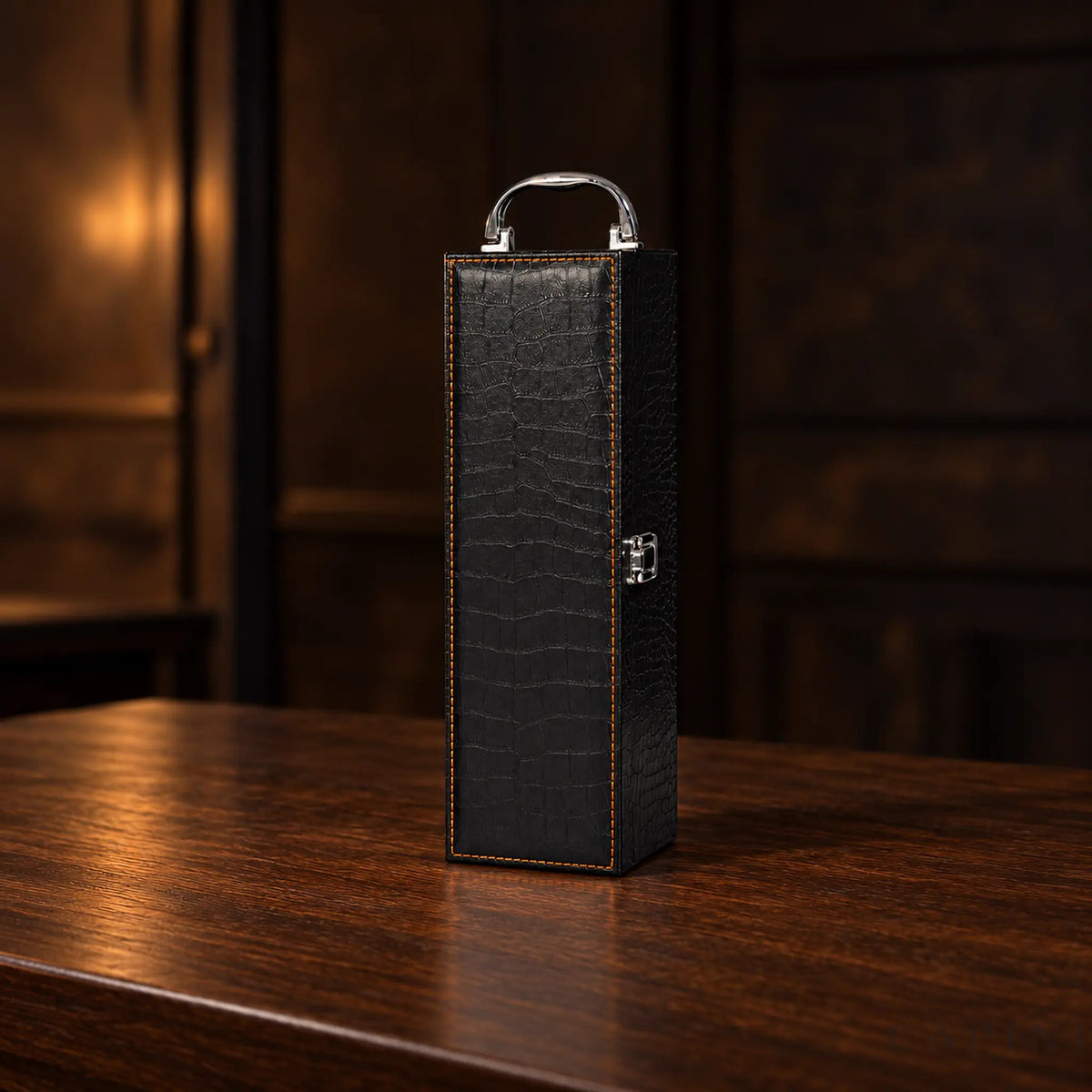
- Montalcino: a rigid case for one standard 750 ml bottle, with a waiter's corkscrew, foil cutter, aerating pourer and drip ring fitted in the lid. For the person who loves wine.


Each carrier is named after an Italian wine town; the names are our inspiration, not where the carriers are made. Read the stories in the five towns behind our wine carriers, or see how vegan leather differs from hide in our guide to leather, Alcantara and vegan leather. For more ideas, see our gift guide for Apple users.
Frequently asked questions
Is it rude to bring wine to a dinner party?
No. It is a common and welcome gesture, as long as it is offered as a gift and not as a contribution the host must serve. The only real exception is a host who does not drink alcohol.
Does the host have to open the wine a guest brings?
No. Etiquette guides advise that a bottle brought by a guest is a gift for the host to enjoy another time. If they open it, that is their choice.
Should I bring red or white wine?
Either is fine when the bottle is a gift for later. A red needs nothing on arrival. A white or sparkling wine will need chilling before it is served, so it is best when clearly meant for another day.
How many bottles should I bring?
One is enough for a dinner. Two suit a housewarming or a larger gathering where you want to leave one to keep.
Is a bottle included with your wine carriers?
No. Our carriers are sold empty: the bottle, and any glasses shown in photos, are not included.
Written by the Capini Firenze team. We work with these materials every day and update this guide when our range changes.

Lämna en kommentar
Denna webbplats är skyddad av hCaptcha och hCaptchas integritetspolicy . Användarvillkor gäller.