
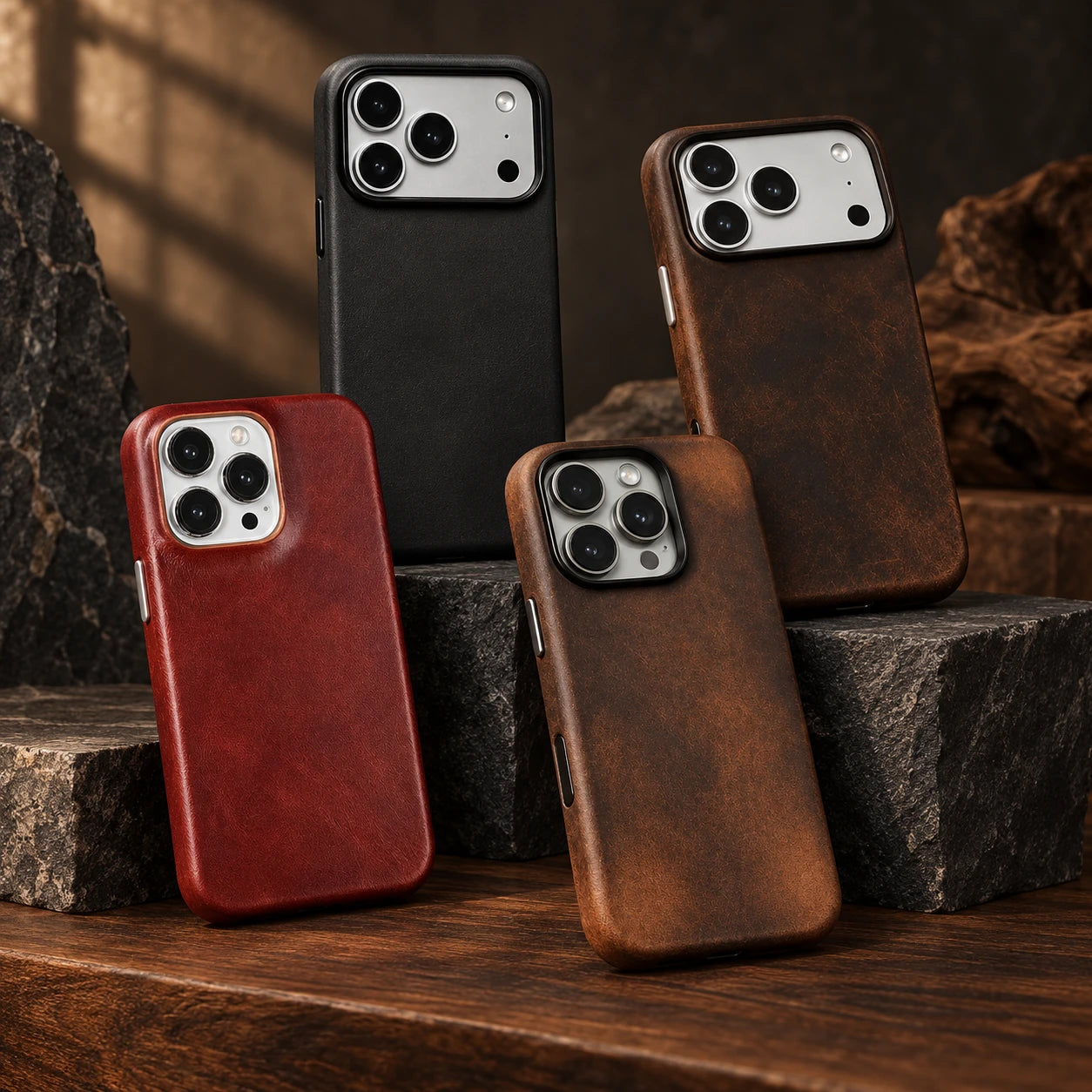
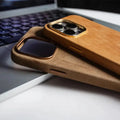
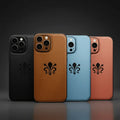
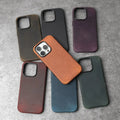




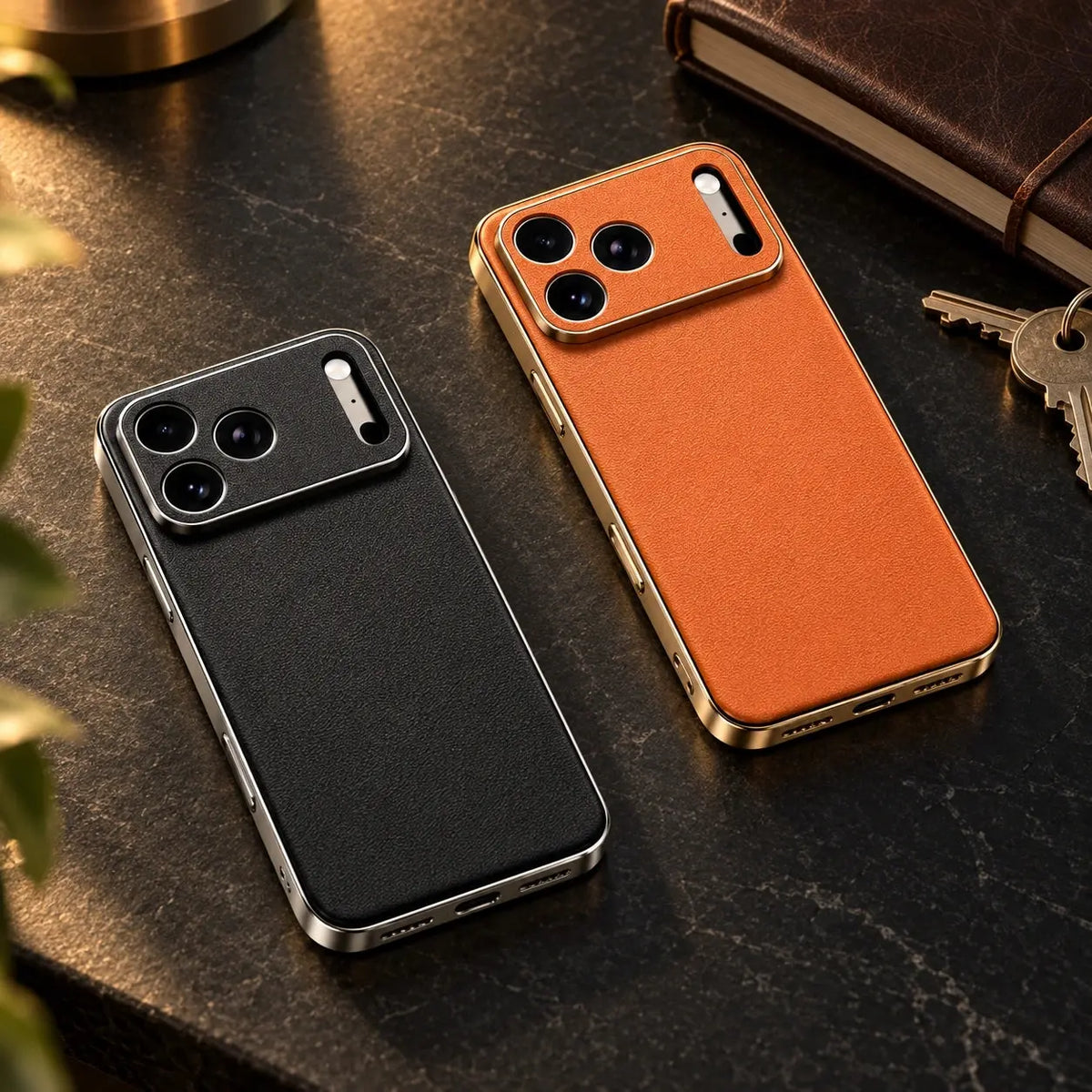
A leather case looks like the gentle option, and people reasonably ask whether it does anything when the phone hits the floor. It does, but not because of the leather. The protection in a good leather case comes from what is underneath and around it: the shell, the raised edges and the corners. This guide explains what each part does, what a leather case cannot do, and how to choose one for the way you actually use your phone.
Yes, a well-built leather case protects an iPhone from everyday drops and knocks, but the protection comes from the structure under the leather: a rigid shell, raised edges around the screen and camera, and reinforced corners. The leather adds grip, so you drop the phone less. No case makes a phone drop-proof, so add a glass screen protector.
- The shell, the raised edges and the corners do the protecting. The leather is the surface you hold.
- Grip is protection too: a matte leather surface slips out of the hand less than glossy plastic.
- Raised edges protect the screen and lenses when the phone lands flat. They do not help on a sharp edge.
- A leather case is built for everyday drops, not for heavy impact. Rugged cases are a different category.
- A case protects the back and the edges. The screen and the lenses need their own glass.
What actually protects an iPhone in a drop?
When a phone lands, the force has to go somewhere. A good case spreads it, absorbs some of it, and keeps the glass away from the ground. Four parts do that work.
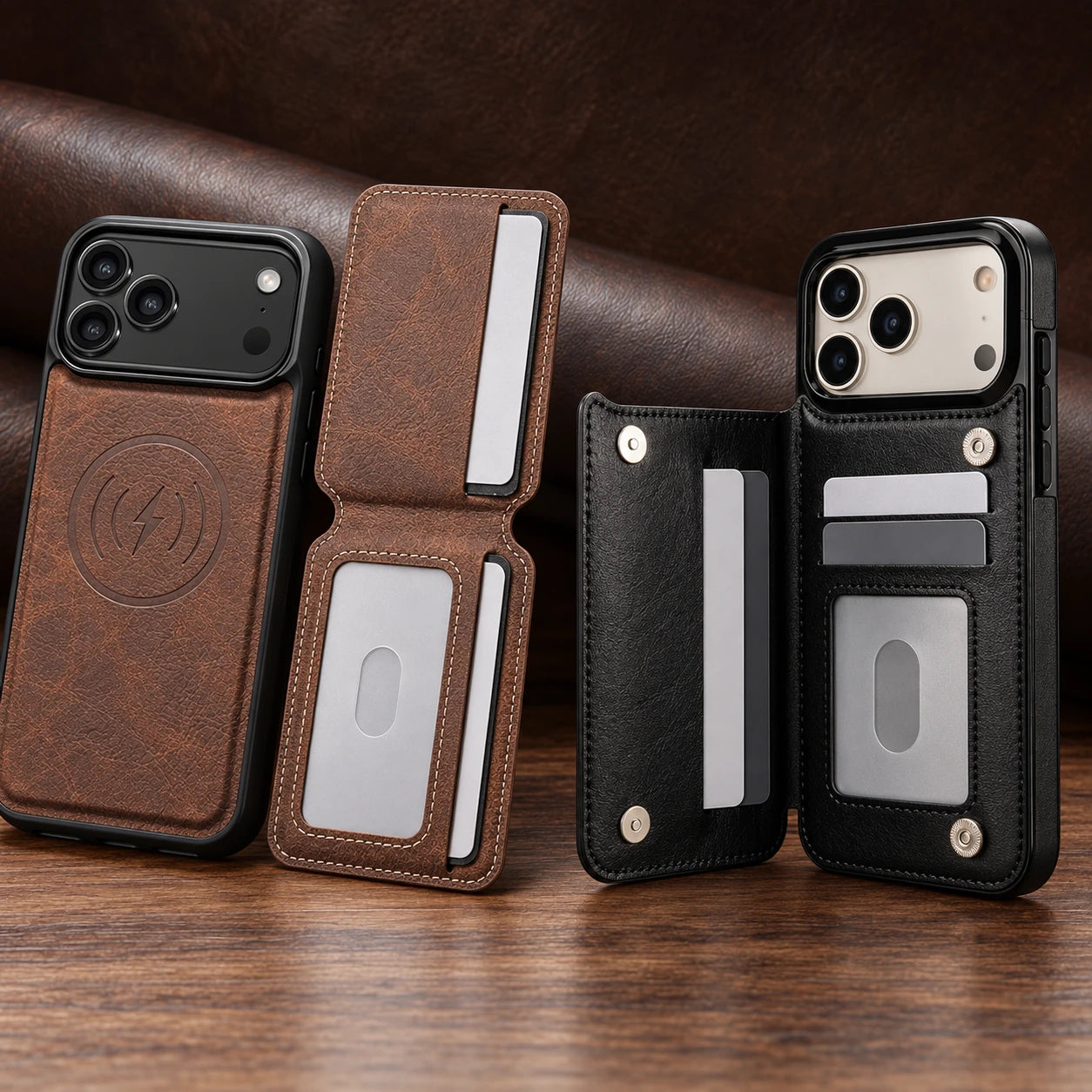
- The shell: a rigid polycarbonate (PC) shell holds its shape and spreads the force of a knock across the case instead of one point on the phone. Some cases add TPU, a softer, flexible plastic that absorbs shock.
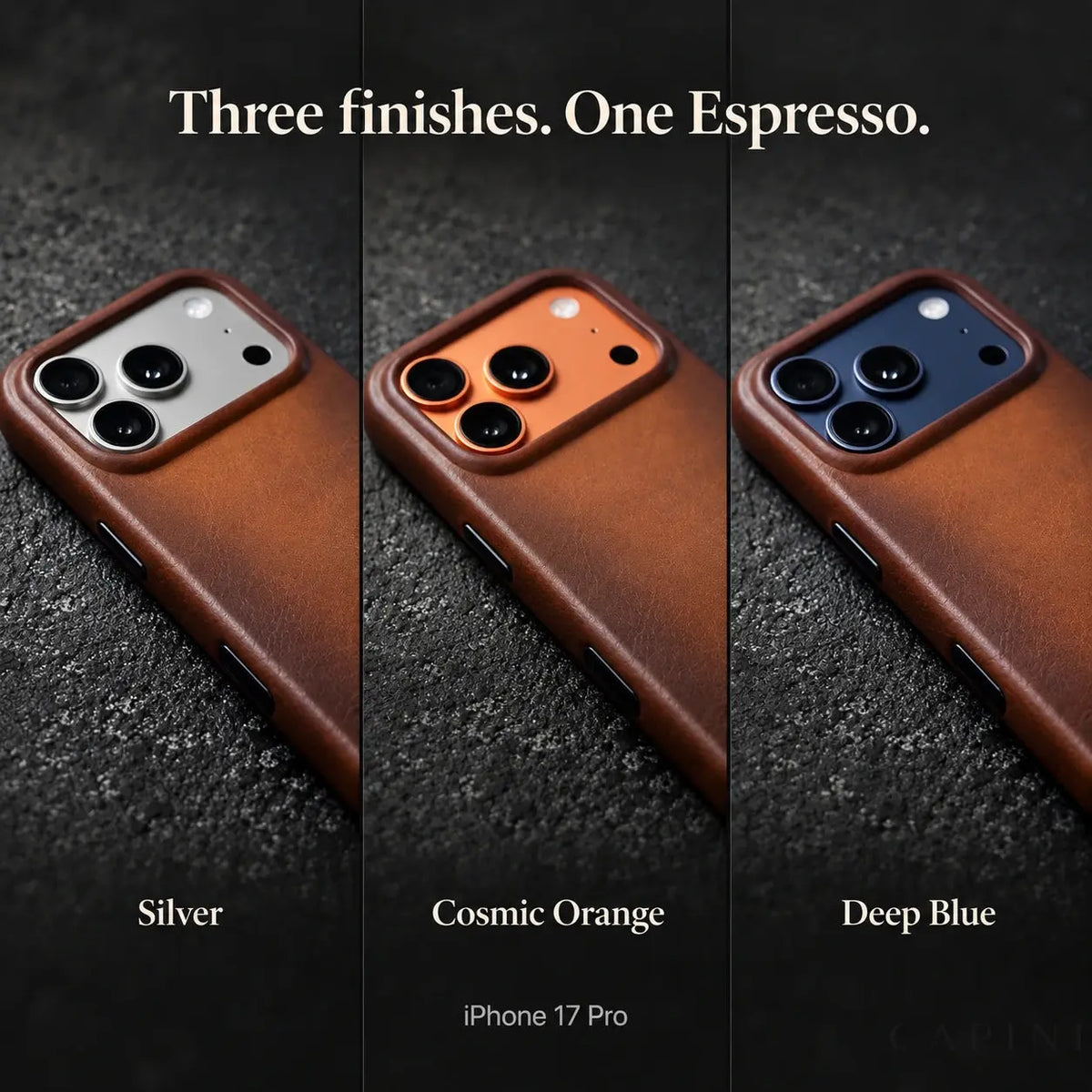
- Raised edges: a lip that stands slightly above the screen and the camera keeps the glass off a flat surface when the phone lands face-down or is put down on a table.
- Corners: phones often land on a corner, where the force is concentrated on a small area. Reinforced or shock-absorbing corners are there for that moment.
- The fit: a case that sits tight stays on the phone in a fall. A loose one can shift and expose an edge. That is why the case has to be cut for your exact model.

What does the leather itself do?
Leather is not armour. A thin layer of leather over a shell is not a shock absorber on its own. It helps in three quieter ways.
- Grip: a matte leather surface holds in the hand better than glossy plastic, so the phone slips less in the first place. The Ferrara, for example, has a matte, non-slip surface, and the Siena page puts the point simply: a more secure hold means less chance of drops.
- A surface that takes the scrapes: small knocks and scuffs land on the leather instead of the phone.
- Scuffs that become character: on full-grain leather, those marks do not read as damage for long. They blend into the patina.

The Ferrara is made from Italian full-grain Crazy Horse cowhide from the Mastrotto tannery. Crazy Horse is a finish, not the animal: the hide is cow, worked with a heavy wax that lightens where the leather bends and darkens where the hand rests. Giulio M., Italy, wrote about his Ferrara: "La pelle Mastrotto è davvero premium. Il crazy horse cambia tono dopo pochi giorni e diventa ancora più bello." (The Mastrotto leather is truly premium. The Crazy Horse changes tone after a few days and becomes even more beautiful.) Our guide to leather patina explains why.
How do our leather cases compare on protection?
This table lists only what each product page states. A dash means the page does not describe that feature, not that it is missing.
| Case | Shell | Screen and camera | Corners | Notes |
|---|---|---|---|---|
| Napoli | High-strength PC core | Raised edges, metal camera frame | Reinforced to absorb everyday impacts | Italian Nappa |
| Portofino | PC and TPU | Raised screen edge, full lens protection | Shockproof | Slim frame |
| Parma | Rigid PC core | Slightly raised edges | Four-corner shockproof design | Full-cover, metal button covers |
| Copenhagen | – | Raised edges, raised camera surround | Reinforced | Vegetable-tanned Italian cowhide |
| Ferrara | Rigid PC shell | Raised edges around screen and camera | – | Full-cover, non-slip surface |
| Torino | Full-cover PC shell | Raised edges around screen and camera | – | Full-cover, anti-slip |
| Siena | Impact-resistant shell | Slightly raised lip | – | Slim, non-slip |
| Bologna | Rigid PC inner shell | Slightly raised lips | – | Half-wrapped, slim |
| Lucca | Slim half-wrapped shell | Slightly raised edges | – | Half-wrapped, light |
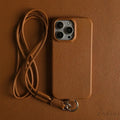
| Milano Lanyard | Slim PC back cover | Slightly raised edges | – | Detachable crossbody strap |

Is a leather case as protective as a rugged case?
No, and we would rather say that plainly. Rugged cases are thicker, often with several layers and bumpers, and are built for heavy impact. A leather case is built for everyday protection with a slim profile and a better feel in the hand.
Some rugged cases are sold with drop-test claims against specific standards. We have not run certified drop tests on our cases, so we do not print drop heights. We tell you what each part is built to do, and let you judge.
If you work on a building site, climb, or drop your phone on stone every week, a rugged case is the honest choice. If your phone lives in a pocket, a bag and on a desk, a well-built leather case covers the knocks that actually happen.
What can no case prevent?
- A drop onto a sharp edge: a step, a kerb or a stone can reach the screen past any raised lip.
- A hard landing on the screen side on rough ground: raised edges protect against flat surfaces, not uneven ones.
- Bending and crushing: sitting on a phone in a back pocket puts force on it that a slim case cannot stop.
- Water: a leather case is not waterproof and does not protect the phone from liquids.
How do you protect the screen and camera too?
A case protects the back and the edges. The screen and the camera lenses are glass, and they need their own layer.

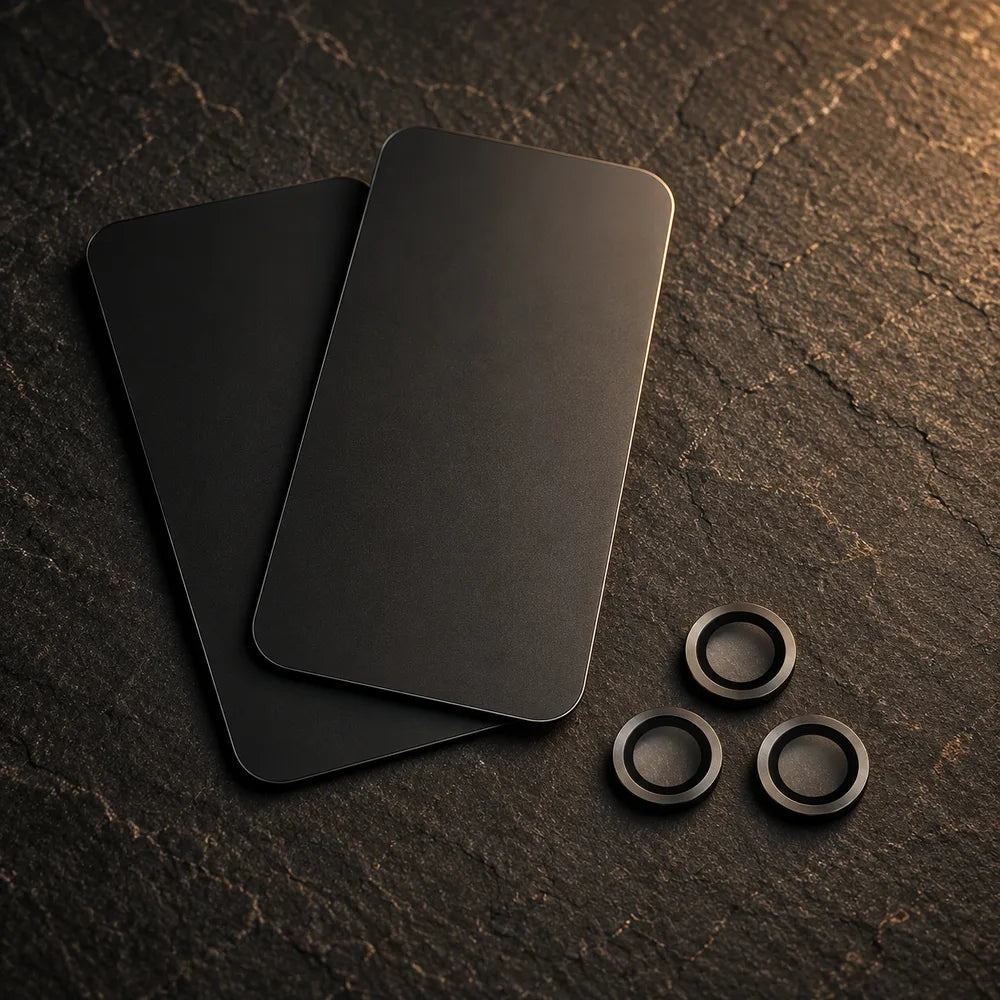
- Screen: a tempered glass protector takes scratches and knocks on itself. The ULTRAPROTECT is matte tempered glass that also narrows the viewing angle, so the screen is hard to read from the side.
- Lenses: the camera bump stands proud of the phone, so it is often the first thing to touch a surface. Lens Armor covers each lens individually with 9H tempered glass in an aluminium ring, and is sized to fit with our leather cases.

See all screen and camera protectors.
Common mistakes that leave a phone exposed
- A case for the wrong model: the raised edges sit in the wrong place and the case can shift in a fall. Our guide to finding your iPhone model takes ten seconds.
- Skipping the screen protector: the case does nothing for the front glass.
- Placing the phone face-down on rough surfaces: a raised lip helps on a flat table, not on gravel or stone.
- Keeping a case that has loosened or cracked: a shell that no longer holds tight no longer spreads the force.
- Cleaning leather with alcohol: harsh cleaners dry the surface. Wipe with a soft, dry or slightly damp cloth. Our care guide covers each leather.
How to choose a leather case for protection
Choose for the way you use the phone, not for the worst case you can imagine.
- You drop your phone more than you would like: look for reinforced or shockproof corners, such as Napoli, Portofino, Parma or Copenhagen.
- You take a lot of photos: choose a case with a raised or framed camera surround, such as Napoli or Portofino, and add Lens Armor.
- Your hands are often full: the Milano Lanyard has a detachable crossbody strap, so the phone stays on you.
- You want the slimmest case: Lucca and Bologna are light, half-wrapped shells. Pair them with a screen protector.
- You want leather that wears in, not out: Ferrara or Siena in Crazy Horse cowhide, where scuffs blend into patina.
To compare the leathers themselves, read our guide to full-grain, top-grain and genuine leather, or browse all iPhone cases.
Frequently asked questions
Does leather absorb the shock of a drop?
Very little on its own. The shell, the corners and the raised edges absorb and spread the force. The leather adds grip and takes surface scuffs.
Is a leather case as protective as a rugged case?
No. Rugged cases are thicker and built for heavy impact. A leather case is built for everyday drops with a slim profile.
Do raised edges really matter?
Yes. They keep the screen and the lenses from touching the surface when the phone lands flat or lies face-down.
How high a drop can your cases survive?
We have not run certified drop tests, so we do not give drop heights. We describe what each part of the case is built to do.
Should I still use a screen protector with a leather case?
Yes. A case protects the back and edges. A glass protector protects the screen itself.
Will the leather be damaged if I drop the phone?
It may scuff. On full-grain leathers such as Crazy Horse, scuffs tend to blend into the patina over time instead of looking like damage.
Written by the Capini Firenze team. We work with these leathers every day and update this guide when our materials change.

Lämna en kommentar
Denna webbplats är skyddad av hCaptcha och hCaptchas integritetspolicy . Användarvillkor gäller.