




In 1991, the share of people in Ferrara who used a bicycle to get around was 30.7%. Copenhagen stood at 30% that year. Nine years later a survey counted 30.9%. In Ferrara, the bicycle is simply how the city moves.
We named our bestselling iPhone case after this city. Not because the case comes from there, but because of an idea Ferrara keeps returning to: ordinary things, used every day, looked at for a long time. This is the city behind the name, and what it has to do with a piece of Crazy Horse leather.
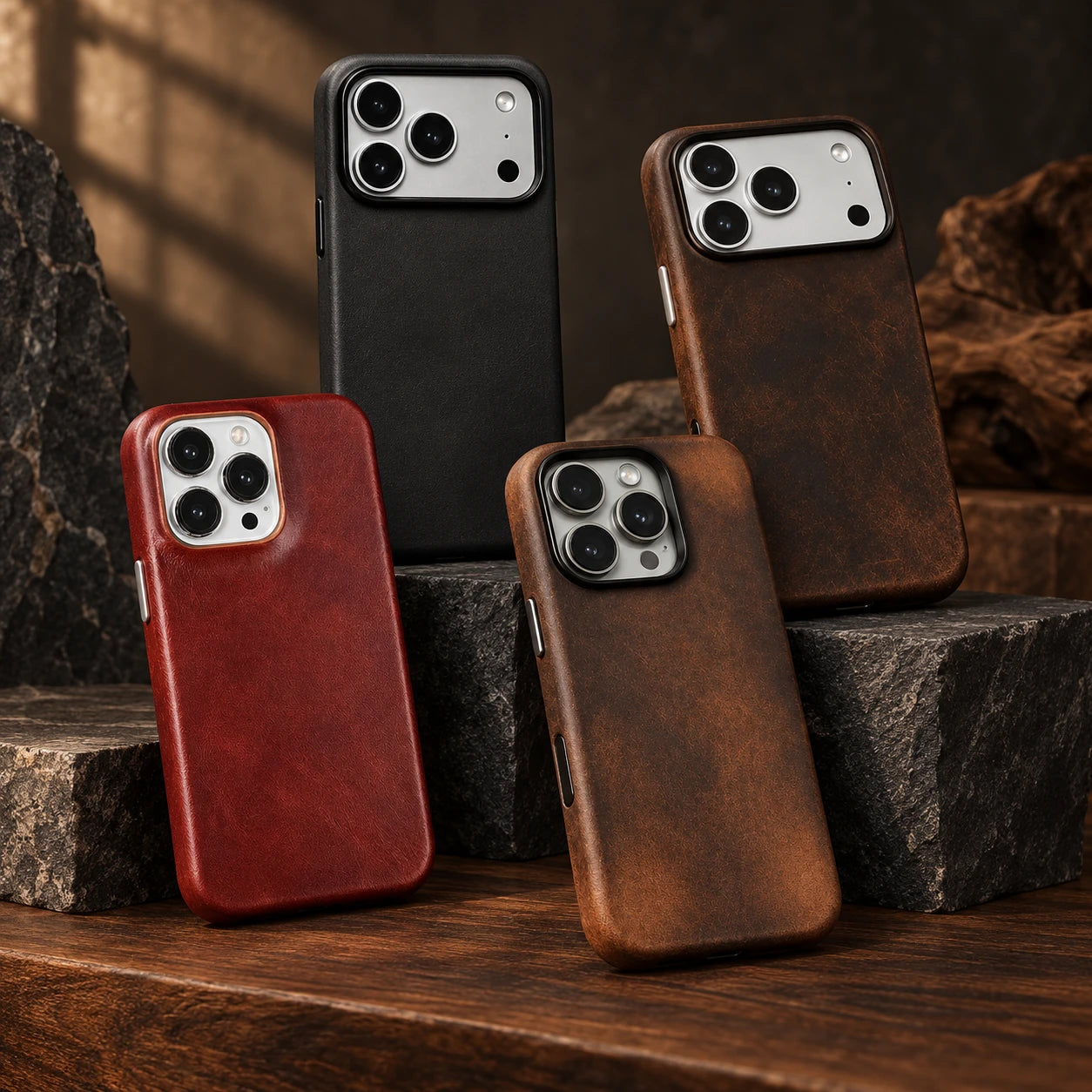
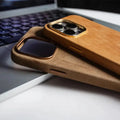
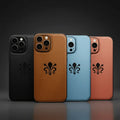
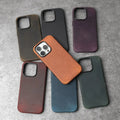
Our Ferrara case is named after Ferrara, a Renaissance city in Emilia-Romagna where close to a third of residents got around by bicycle in 1991 and 2000, and where Giorgio de Chirico began calling his painting "metaphysical". The name is an idea, not an origin. Its leather is full-grain Crazy Horse cowhide tanned by Mastrotto in Vicenza, a finish chosen because it records use instead of hiding it.
- Ferrara is a bicycle city by measurement: 30.7% in 1991 (Copenhagen: 30%) and 30.9% in 2000.
- Its northern half, the Addizione Erculea (1492–1505), was drawn in straight lines and right angles. Bruno Zevi called Ferrara the first modern European city because of it.
- UNESCO inscribed the city in 1995 and extended the site to the Po Delta in 1999.
- The case takes the city's name and an idea, never its origin.
- Crazy Horse is a finish, not an animal. The hide is cow.
Why is Ferrara called a city of bicycles?
Because the numbers say so. The city's own cycling project records that 30.7% of people in Ferrara used the bicycle in 1991, against 30% in Copenhagen. A DataBank survey in 2000 put it at 30.9%. In 2011 the city won first prize in Italy's national urban cycling championship.
You may read that Ferrara has more bicycles than anywhere in Europe. We found no source for that, so we leave it out. The measured figures are enough.
We like what that does to an object. A bicycle used every day gets scratched, and nobody replaces it for that. That is our reading, not a statistic, and the first reason for the name.
Why is Ferrara called the first modern European city?
Between 1492 and 1505, Duke Ercole I d'Este ordered a great expansion of the city to the north, and his court architect, Biagio Rossetti, carried it out. It is known as the Addizione Erculea.
The medieval city lies to the south, in narrow lanes such as Via delle Volte, crossed by arches. The Addizione is the opposite: a plan of straight lines and right angles. According to the architectural historian Bruno Zevi, it is thanks to the Addizione Erculea that Ferrara should be considered the first modern European city.
Its heart is a crossroads, the Quadrivio degli Angeli, with Palazzo dei Diamanti, Palazzo Prosperi and Palazzo Turchi di Bagno at its corners.
Why is Ferrara a UNESCO World Heritage Site?
UNESCO first inscribed the city in 1995 and extended the site in 1999 to the Po Delta. Today it is listed as "Ferrara, City of the Renaissance, and its Po Delta": a cultural landscape with an exceptionally well preserved Renaissance centre, which also takes in the delizie of the Este family in the Delta.
One correction: the Delta lies in the wider province. The city itself is inland.
Which artists are linked to Ferrara?
- Giorgio de Chirico was not from Ferrara. He arrived in 1915 for military service and stayed three and a half years. There he met Carlo Carrà, and there he began calling his painting "metaphysical". In 2015–16, Palazzo dei Diamanti gathered almost all his Ferrara work in one exhibition.
- Michelangelo Antonioni, the film director, was born here on 29 September 1912.
- Giorgio Bassani, the writer, was born in Bologna in 1916 and lived in Ferrara until 1943: formed by the city, not born in it.
Metaphysical painting is known for ordinary things set in still, empty spaces, looked at long enough to become strange. That is the second reason for the name. A phone case is as ordinary as objects get, until you look at one after a year of use.
What happens in Ferrara through the year?
- The Palio di Ferrara, in May. The races are run in Piazza Ariostea on the last Saturday of May. In 2026 they began at 8 pm on 30 May, with the eight Contrade (the city's districts) and the Ducal Court.
- The Ferrara Buskers Festival, in late August. A contemporary festival of street music, not a medieval fair. The 2026 edition, from 26 to 30 August, brought more than 250 artists from 19 countries and over 60 shows a night.
The table is its own, too. The tourism office lists four IGP products: the coppia ferrarese bread, cappellacci di zucca ferraresi (pasta filled with pumpkin), salama da sugo and pampepato di Ferrara. In Ferrara, think pumpkin and bread before prosciutto and parmesan.
Ferrara in eight dates
| Year | What happened |
|---|---|
| 1492–1505 | The Addizione Erculea expands the city north, in straight lines and right angles |
| 1912 | Michelangelo Antonioni is born in Ferrara |
| 1915 | Giorgio de Chirico arrives and stays three and a half years |
| 1991 | 30.7% of residents use the bicycle (Copenhagen: 30%) |
| 1995 | UNESCO inscribes Ferrara as a World Heritage Site |
| 1999 | The site is extended to the Po Delta |
| 2000 | A survey puts bicycle use at 30.9% |
| 2011 | First prize in Italy's national urban cycling championship |
What does Ferrara have to do with a leather case?
The city gives the case its name and a way of thinking. Nothing else. Ferrara is in Emilia-Romagna, the leather is tanned in Vicenza, in the Veneto, We never call it "Ferrara leather", because that would not be true.
The idea is the one above: an everyday object used until it carries marks, and ordinary things looked at long enough to be seen. We wanted a case in a leather that keeps a record of its days.

What is the Ferrara case made of?
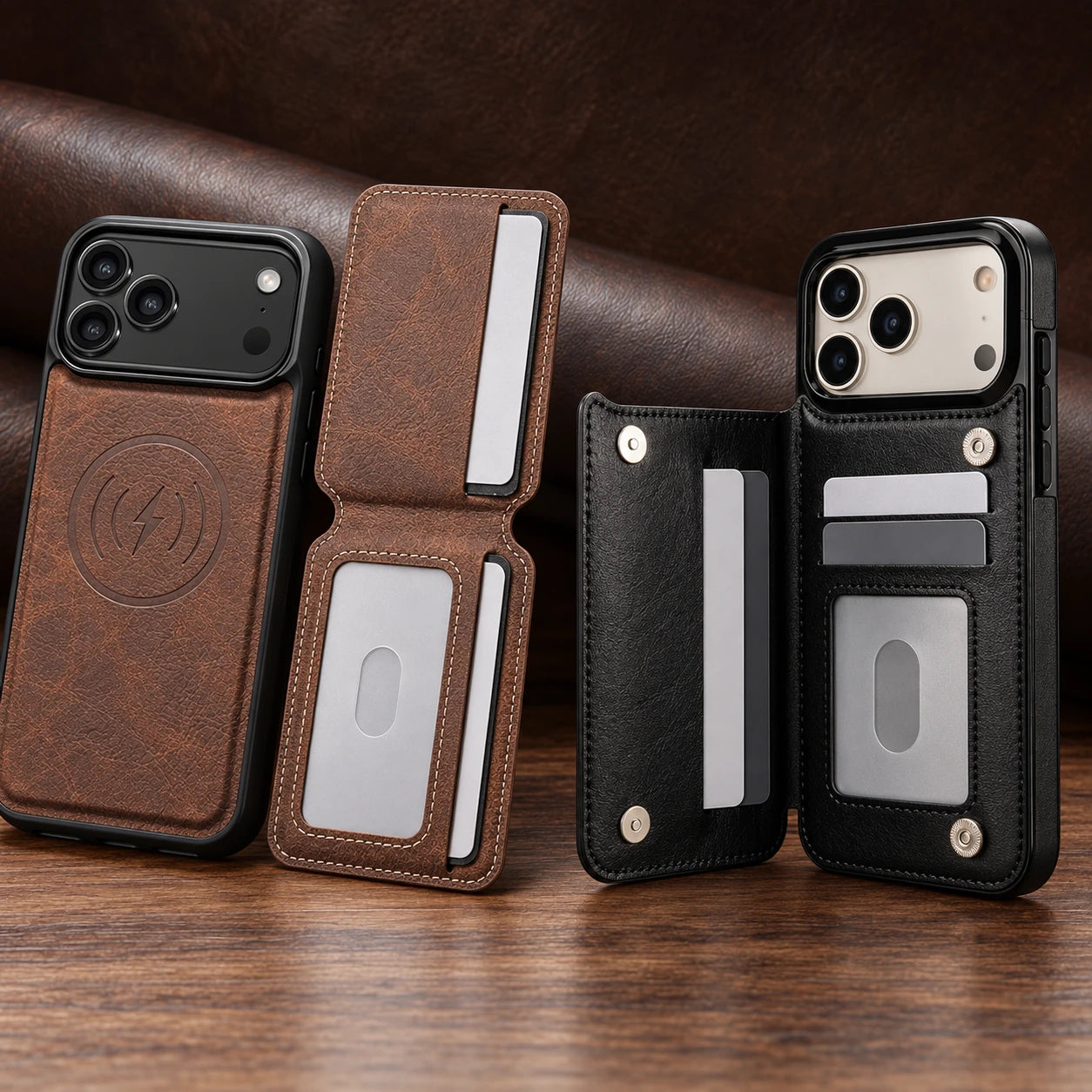
Full-grain cowhide, tanned by Mastrotto in Vicenza, Italy, and finished as Crazy Horse. The name causes confusion, so here it is plainly: Crazy Horse is a way of finishing leather, not the animal it comes from. The hide is cow. After tanning, it is worked with a heavy wax pull-up, which makes the surface lighten where the leather bends and darken where your hand rests.
Full grain keeps the surface the animal actually had: the grain, the shifts in tone, the small healed marks. Nothing is sanded off and nothing is printed on top, which is why one case arrives a shade deeper than the next. Our guide to Crazy Horse, oil-wax, pull-up and Nappa compares it with our other leathers.
Underneath is a rigid shell with a built-in MagSafe magnet, raised edges around the screen and camera, and a soft microfibre lining. Our article on leather cases and MagSafe explains how it works through leather.

How does the Ferrara case change over time?
It moves rather than wears. Crazy Horse marks easily: that is the point.
- Week one: the first scuffs appear. Rub one with a warm finger and it often softens back into the surface.
- By month three: the scratch you made in week one has become part of the finish.
- Around six months: the corners you hold have lightened, the back has darkened where it sits in a pocket, and early scuffs read as depth rather than damage.
Giulio M., from Italy, wrote about his: "La pelle Mastrotto è davvero premium. Il crazy horse cambia tono dopo pochi giorni e diventa ancora più bello." In English: "The Mastrotto leather is truly premium. The crazy horse changes tone after a few days and becomes even more beautiful."
Care is short: no alcohol or harsh cleaners, just a soft dry or slightly damp cloth. Our care guide covers rain and deeper marks, and what is leather patina explains why the colour changes.

Is there a matching Ferrara AirPods case?
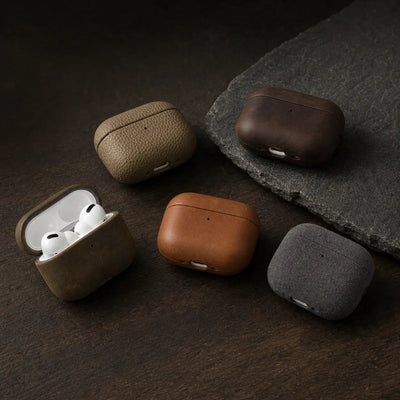
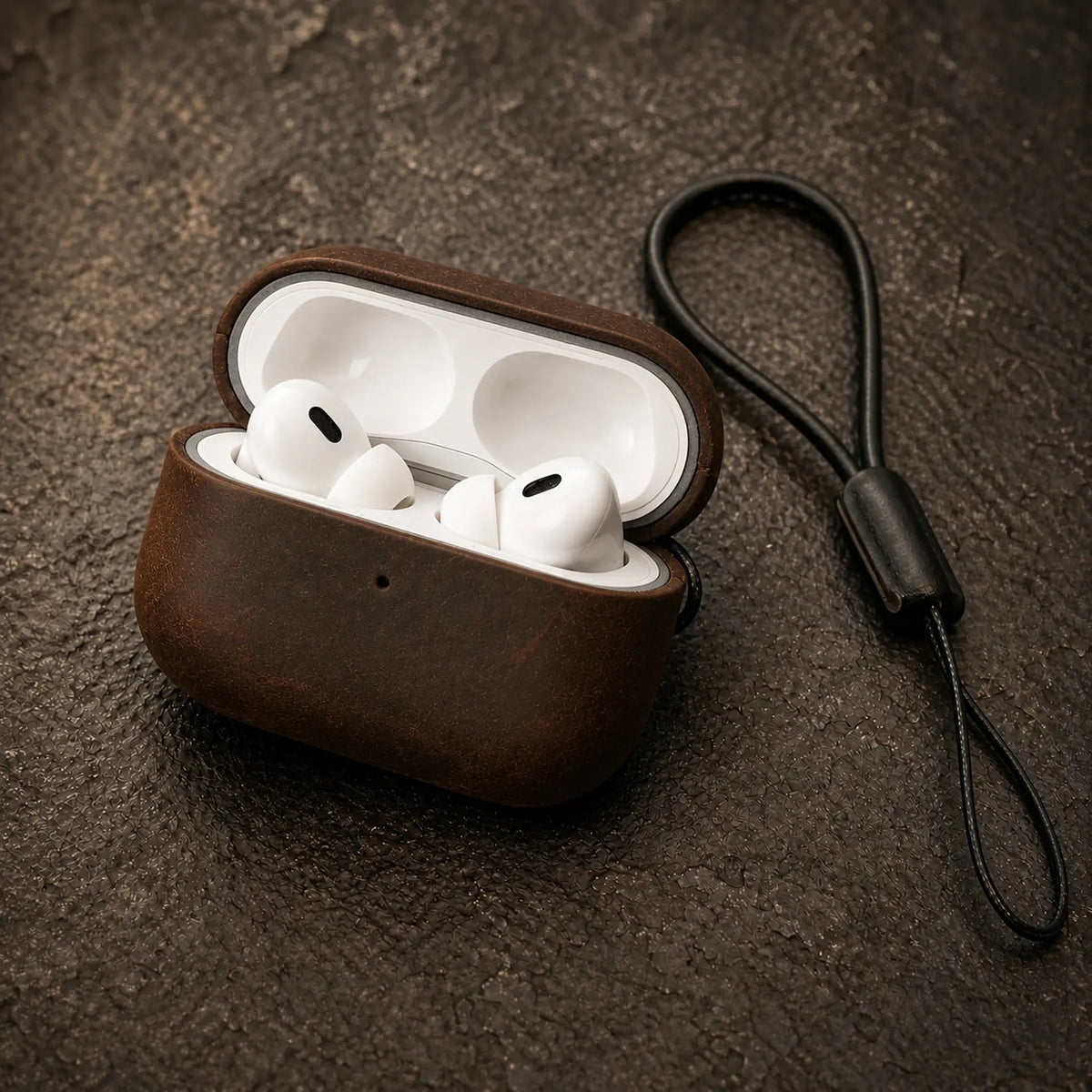
Yes. The Ferrara AirPods case uses the same full-grain cowhide and the same heavy wax pull-up, over a hard shell for daily bumps. It fits in two pieces, and precise cutouts let you charge without taking it off. Choose your AirPods model on the product page.
Sharing leather and finish, the two build the same kind of patina and keep looking like a pair. Find it in our AirPods cases, or put the two together on our build your set page.

Frequently asked questions
Why is the case called Ferrara?
Ferrara is the name of the case and the idea behind it. Its leather is tanned by Mastrotto in Vicenza.
Is Crazy Horse leather made from horses?
No. Crazy Horse is a finish: a heavy wax pull-up worked into the leather after tanning. The hide on the Ferrara case is cow.
Will my Ferrara case scratch?
Yes, lightly, and that is part of the finish. Many light scratches blend back in with warmth and use.
Does the Ferrara case work with MagSafe?
Yes. Its rigid shell has a built-in magnet and works with MagSafe chargers and magnetic accessories.
What is worth seeing in Ferrara?
The Quadrivio degli Angeli and Palazzo dei Diamanti in the Addizione Erculea, the arches of Via delle Volte, and, if your dates allow, the Palio in May or the Buskers Festival in August.
Written by the Capini Firenze team. We work with these leathers every day and update this guide when our materials change. City facts from UNESCO, the Comune di Ferrara, Ferrara in Bici, MuseoFerrara, Palazzo dei Diamanti, Treccani and the city's tourism and festival sites.

Lämna en kommentar
Denna webbplats är skyddad av hCaptcha och hCaptchas integritetspolicy . Användarvillkor gäller.