
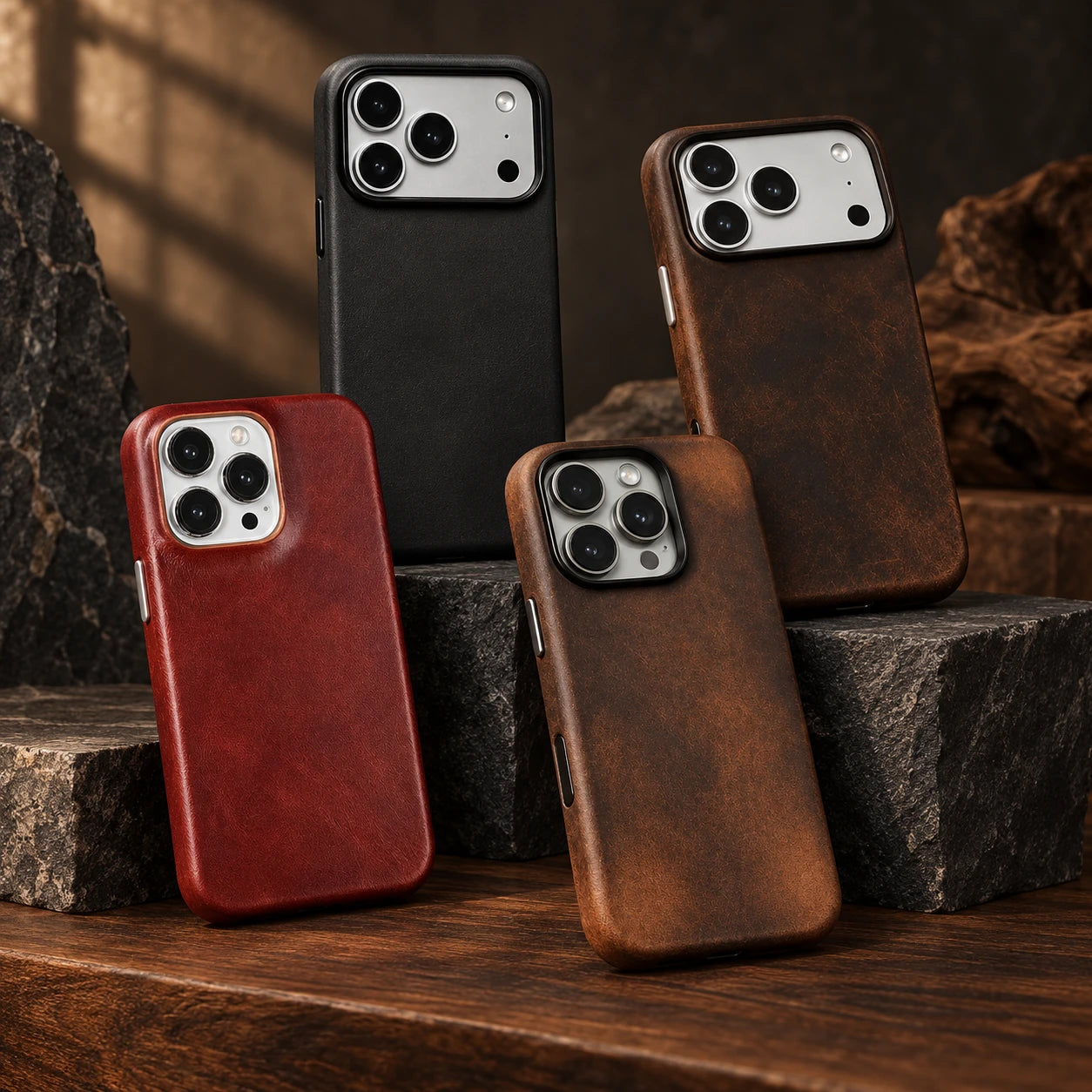













Leather phone cases are described with a handful of words that sound technical and are rarely explained: Crazy Horse, oil-wax, pull-up, Nappa, vegetable-tanned. They are not grades, and Crazy Horse is not an animal: it is a finish, and the hide underneath is cow. These words describe how a hide was tanned and finished. That finish decides how a case feels on day one and how it looks a year later.
This guide explains each one plainly, using the leathers we work with every day, and ends with a simple way to choose.
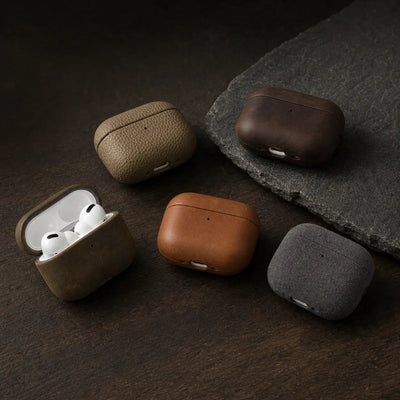
Crazy Horse, oil-wax and pull-up are related finishes: oils and waxes worked into full-grain leather, so the colour shifts where it bends and deepens with use. Crazy Horse is the most heavily waxed and changes fastest, with a matte, rugged surface. Nappa is the opposite: smooth, supple and even, and it changes slowly.
- Crazy Horse is a finish, not an animal. The hide is cow, worked with a heavy wax pull-up.
- Crazy Horse, oil-wax and pull-up overlap. One leather can honestly carry more than one of these names.
- The more wax and oil in the finish, the faster the case changes and the easier small scratches are to rub away.
- Nappa suits people who want a quiet case that stays close to how it arrived.
- Vegetable-tanned describes the tanning, not the finish. It gives a firm leather that deepens with light and handling.
What do these leather names actually describe?
Leather goes through two stages that matter to you. Tanning turns raw hide into a stable material that will not rot. Finishing decides the surface: how it feels, how it reflects light and how it reacts to your hands.
Crazy Horse, oil-wax and pull-up are names for finishes. Nappa describes a soft, smooth type of leather and the way it is finished. Vegetable-tanned describes the tanning itself. Full-grain, which you will see on most of our product pages, is different again: it tells you which layer of the hide is used. We explain that in full-grain vs top-grain vs genuine leather.
These are trade names, and tanneries do not always use them in exactly the same way. That is why it helps to know what each one should look and feel like, rather than relying on the label alone.
What is Crazy Horse leather?
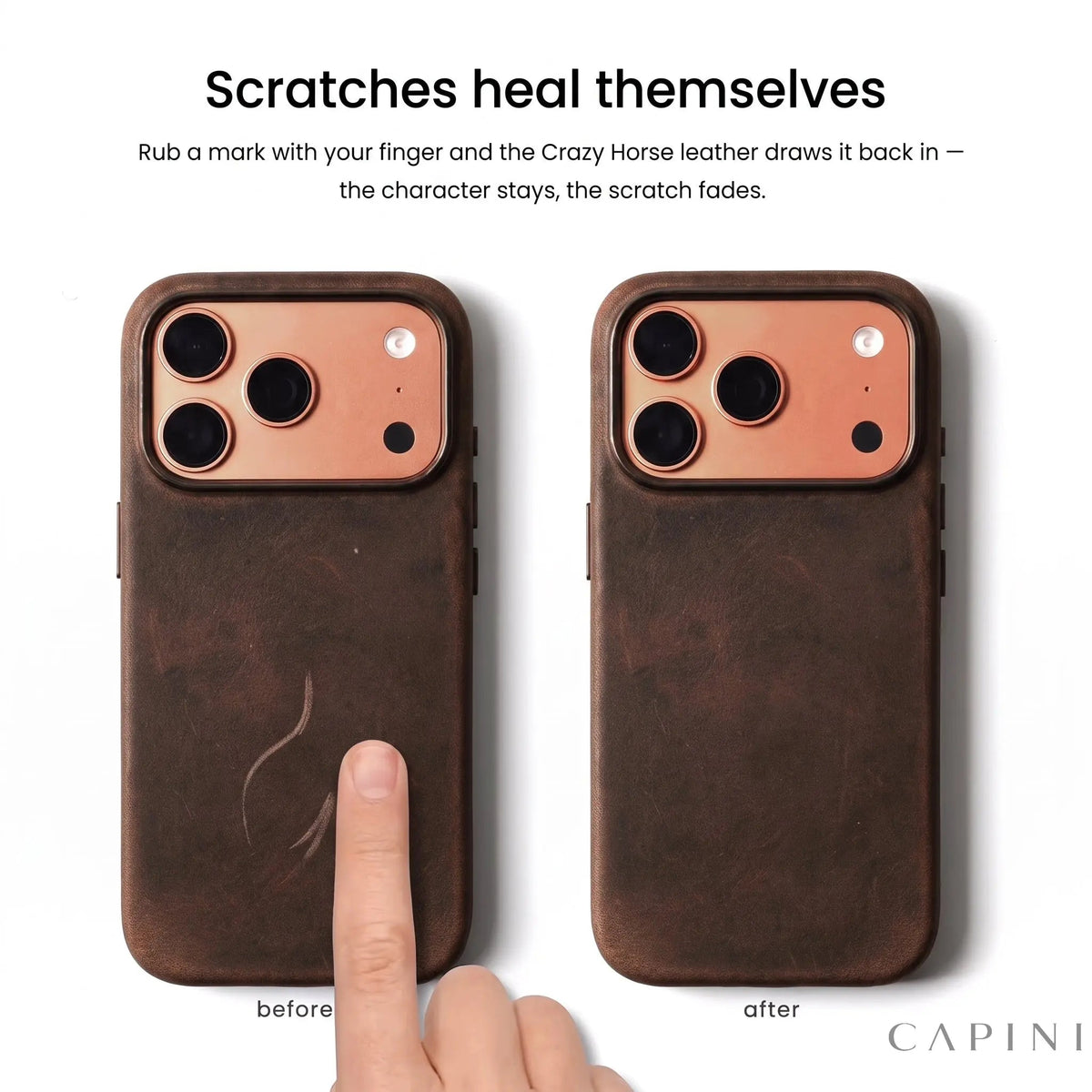
Crazy Horse is a way of finishing leather, not the animal it comes from. The hide is cow. It is full-grain cowhide worked with a heavy wax pull-up, which leaves a matte, slightly rugged surface with natural tonal variation.
That wax is what makes it move. The surface lightens where the leather bends and darkens where your hand rests. Light scratches can blend back in with warmth and use, because rubbing moves the wax over the mark.

- Touch: dry, waxy, slightly rough.
- With use: the fastest to change. The corners you hold lighten first, and early scuffs turn into depth.
- Care: rub small marks with your thumb. Wipe with a soft dry or slightly damp cloth. No alcohol or harsh cleaners.
Our Ferrara uses full-grain Crazy Horse cowhide tanned by Mastrotto in Vicenza, Italy. The Siena is full-grain Crazy Horse cowhide with an oil-wax finish. One customer put the appeal simply:
"La pelle Mastrotto è davvero premium. Il crazy horse cambia tono dopo pochi giorni e diventa ancora più bello."
(The Mastrotto leather is truly premium. The Crazy Horse changes tone after a few days and becomes even more beautiful.)
Giulio M., Italy, on the Ferrara
What is oil-wax leather?
Oil-wax leather has oils and waxes worked into it during finishing. It is the broader family that Crazy Horse belongs to. Oil-wax leathers usually have a smoother surface and a soft sheen, where Crazy Horse is matte and rugged.
On an oil-wax case, bends lighten and then settle, and the sheen grows with handling. The leather darkens, marks and softens over the months, more gently than Crazy Horse.

- Touch: smooth, warm, rich.
- With use: darkens and develops patina. The sheen deepens where your hand rests.
- Care: a soft dry or slightly damp cloth, then let it dry naturally.
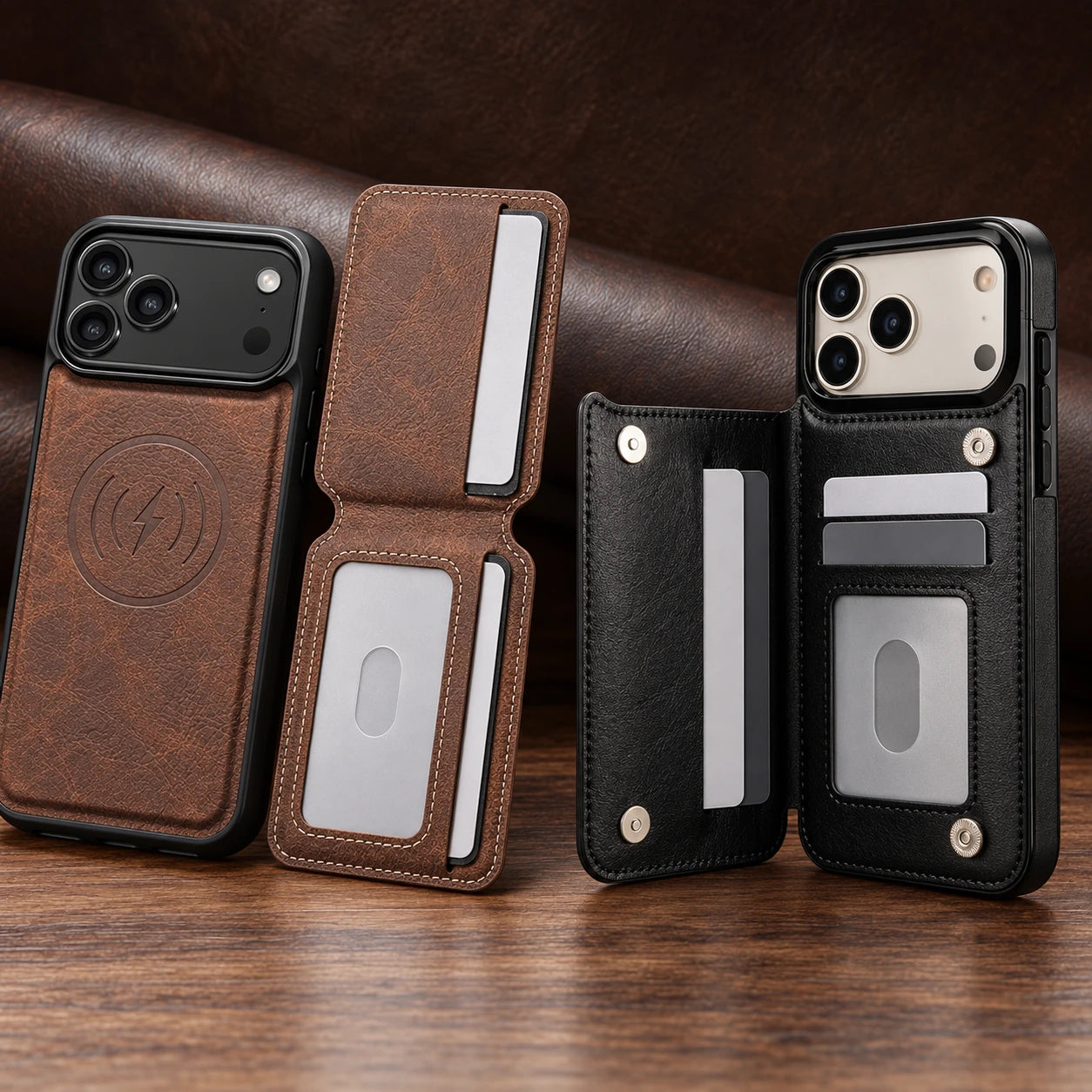
You will find it in the Lucca, a slim half-wrapped shell, and the Torino, a full-cover shell with a built-in MagSafe ring. Both use full-grain oil-wax leather.
What is pull-up leather?
Pull-up describes what you see when you bend the leather. The oils and waxes inside shift as the fibres stretch, so the colour "pulls up" lighter at the fold. Rub it and the colour settles back.
Strictly, Crazy Horse is a type of pull-up leather, and so are many oil-wax leathers. When we call a product pull-up, it is because that colour movement is what you will notice most. Our Parma is full-grain cowhide with an oiled pull-up finish, and its page also describes it as Crazy Horse. We would rather show you that overlap than hide it.

- Touch: supple, smooth, matte.
- With use: lighter where it flexes, darker where you touch it.
- Care: small scratches can often be softened with the warmth of your hands.
One honest caution: on an oil-rich finish like Parma's, frequent use of MagSafe chargers may leave a visible circular mark on the leather. If you want the surface to stay as even as possible, keep that in mind.
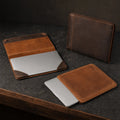
The Ivrea MacBook sleeve and the Cremona Apple Watch strap are pull-up leathers too. Ivrea in cognac lightens with use. In espresso it deepens.
What is Nappa leather?
Nappa is a smooth, soft, fine-grained leather. Where Crazy Horse is about movement, Nappa is about restraint: an even colour, a supple hand and a surface that changes slowly and discreetly.
That makes it the choice for people who want leather without the vintage look. The trade-off is that it builds less visible patina, and scratches do not blend back in the way they can on a waxed leather.

- Touch: smooth, supple, fine.
- With use: stays even and ages slowly.
- Care: wipe gently with a soft, dry cloth. Avoid alcohol, harsh cleaners and oils.
Where does vegetable-tanned leather fit in?
Most leather today is chrome-tanned, which is fast and gives a soft, consistent result. Vegetable tanning uses tannins from plants, such as tree bark, instead. It takes longer and gives a firmer leather with a warm, natural colour that deepens with light and handling.
Because it is a tanning method, not a finish, vegetable-tanned leather can be finished in different ways. What these leathers share is change: a deeper tone and a softer glow, month by month.

Our Copenhagen uses vegetable-tanned Italian cowhide from Conceria 800, a tannery in Tuscany working since 1969. Expect subtle variations and visible processing traces. They are part of natural leather, not flaws.
How do they compare side by side?
| Leather | Surface | How fast it changes | Small scratches | Our pieces |
|---|---|---|---|---|
| Crazy Horse | Matte, waxy, rugged | Fastest | Rub out or darken into patina | Ferrara, Siena |
| Oil-wax | Smooth, soft sheen | Steady | Lighten, then settle | Lucca, Torino |
| Pull-up | Supple, matte, colour moves | Fast where it flexes | Soften with the warmth of your hands | Parma, Ivrea, Cremona |
| Nappa | Smooth, fine, even | Slow | Stay visible for longer | Napoli |
| Vegetable-tanned | Firm, natural | Steady, deepens with light | Become part of the patina | Copenhagen |
For how each one ages in more detail, see what patina is and how a leather case changes.
Which leather should you choose?
Start with how you want the case to look in a year, not on the day it arrives.
- You want it to look like yours, and nobody else's: Crazy Horse.
- You want leather that ages but stays polished: oil-wax.
- You like to see the colour move under your fingers: pull-up.
- You want it to look much the same next year: Nappa.
- You like natural materials that deepen with light: vegetable-tanned.
- You would rather not carry animal hide: none of these. Look at Alcantara, an Italian microfibre, or vegan leather, which is synthetic (PU). Our leather, Alcantara or vegan leather guide compares them.
MagSafe is a separate question: the magnet in the shell decides it, not the leather. You can compare every leather side by side in our iPhone cases.
What mistakes do people make when choosing?
- Treating the first scratch as a defect. On a waxed leather, it is the start of the patina.
- Expecting two cases to match exactly. Each hide has its own grain, shade and small scars.
- Reading "genuine leather" as a grade. It only tells you the material is real hide.
- Putting oils or conditioner on Nappa. It can darken the smooth surface unevenly. Our care guide covers each leather.
Frequently asked questions
Is Crazy Horse leather made from horses?
No. Crazy Horse is the name of a finish. On our Ferrara, the hide is full-grain cowhide tanned by Mastrotto in Italy, then worked with a heavy wax pull-up.
Is Crazy Horse the same as pull-up leather?
It is a type of pull-up leather: a heavily waxed one, with a matte, rugged surface. All Crazy Horse leather shows a pull-up effect, but not all pull-up leather is Crazy Horse.
What is the difference between oil-wax and Crazy Horse?
Both carry oils and waxes. Crazy Horse is more heavily waxed, matte and rugged, and changes faster. Oil-wax leather is usually smoother, with a soft sheen.
Which leather develops patina fastest?
Crazy Horse. Pull-up follows closely where the leather flexes. Nappa is the slowest.
Is Nappa real leather?
Yes. Nappa is real hide with a soft, smooth, fine-grained finish. Our Napoli uses Italian Nappa.
Is vegetable-tanned leather better than chrome-tanned?
Not better, different. Vegetable-tanned leather is firmer and deepens more with light and handling. Chrome-tanned leather is usually softer and more consistent.
Written by the Capini Firenze team. We work with these leathers every day and update this guide when our materials change.

Leave a comment
This site is protected by hCaptcha and the hCaptcha Privacy Policy and Terms of Service apply.