




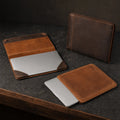

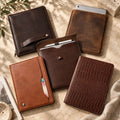


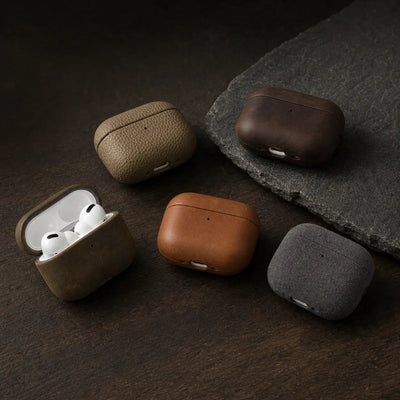
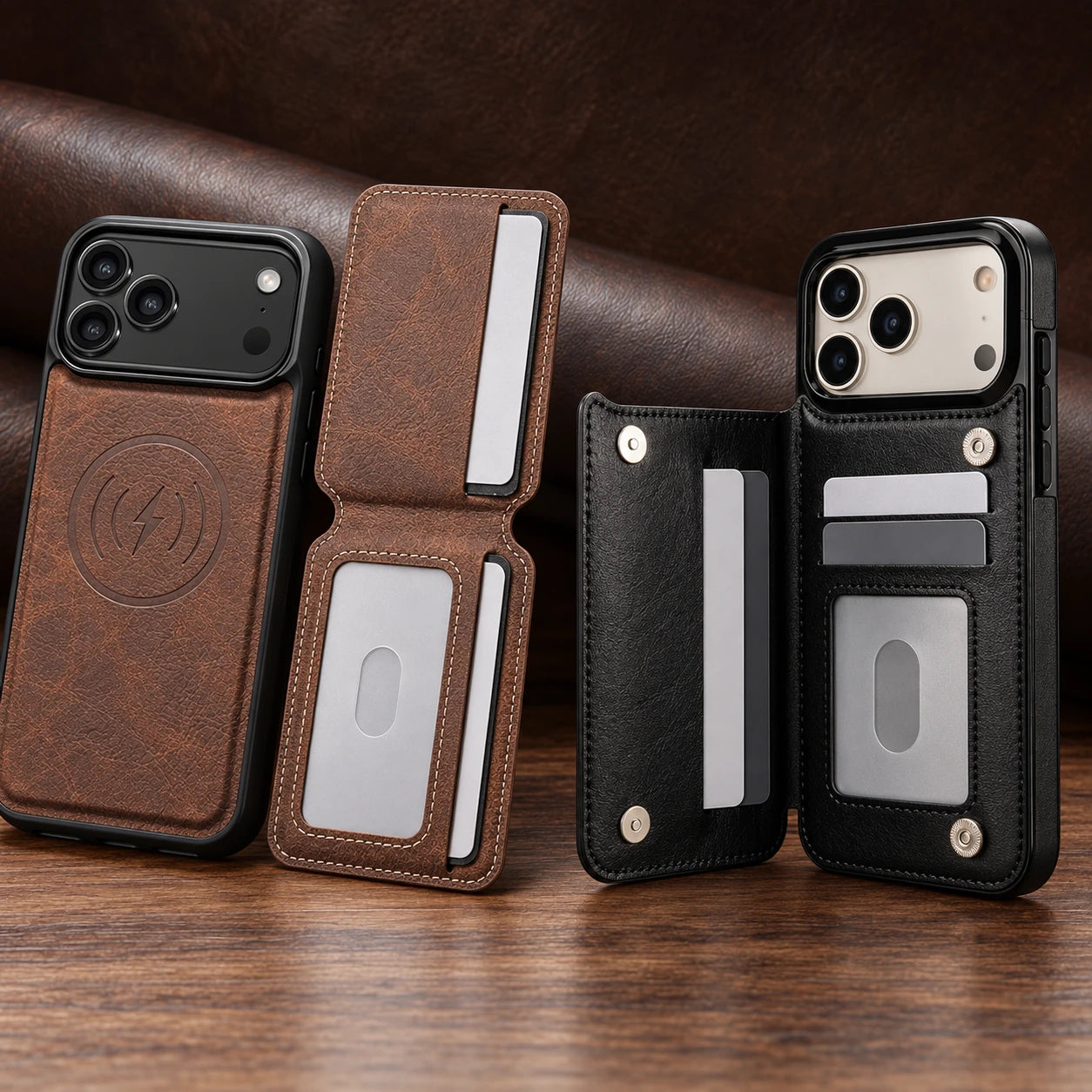

In Naples, coffee is taken standing at the bar. A glass of water comes first. The coffee arrives very hot, in a ceramic cup and never in plastic, and the conversation around it is the real reason for stopping.
Our Nappa iPhone case carries the name of this city. Naples is its name, not its origin, and we would rather say that plainly. Napoli gives the case a name and an idea, and the idea is an old Neapolitan one: elegance is often what you take away.
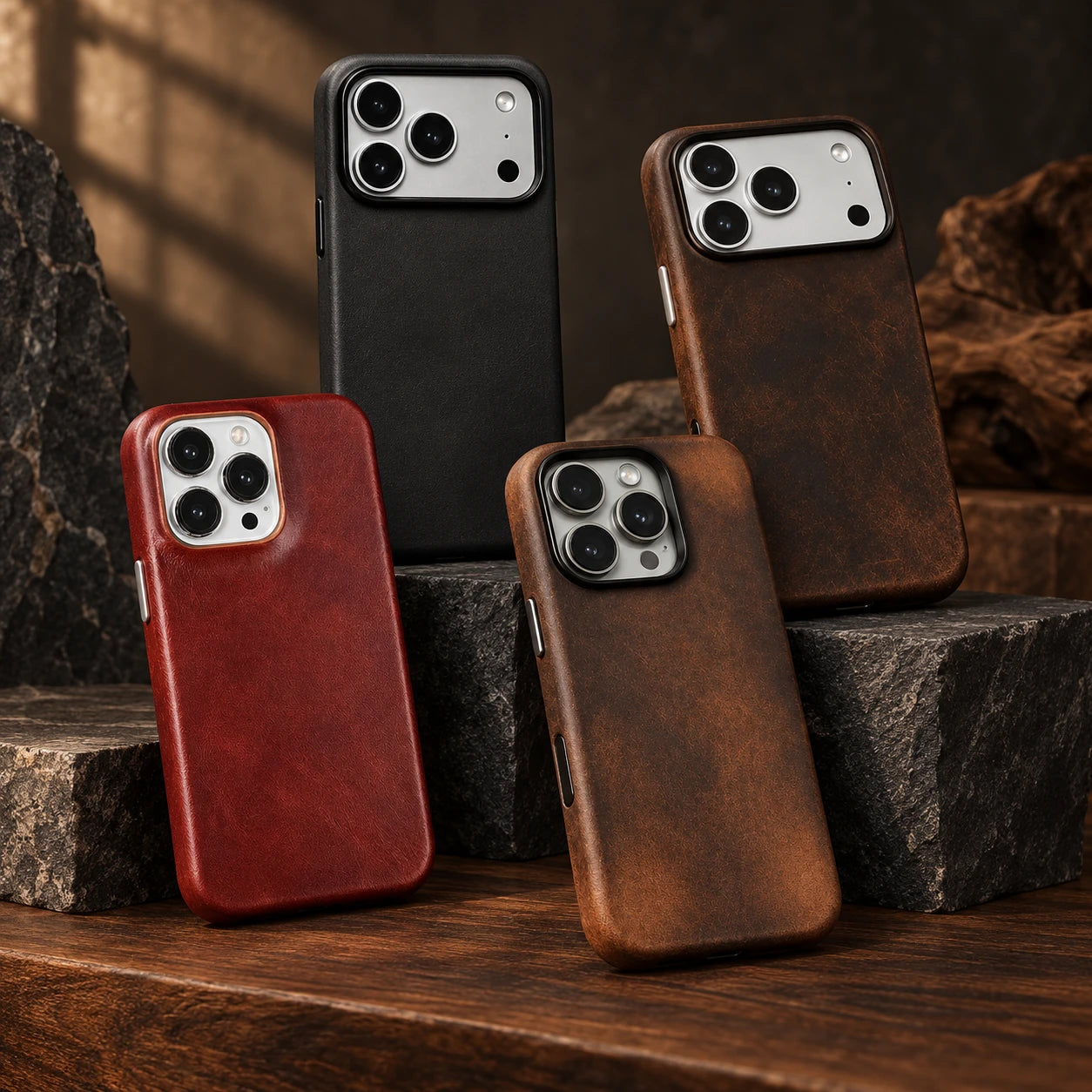
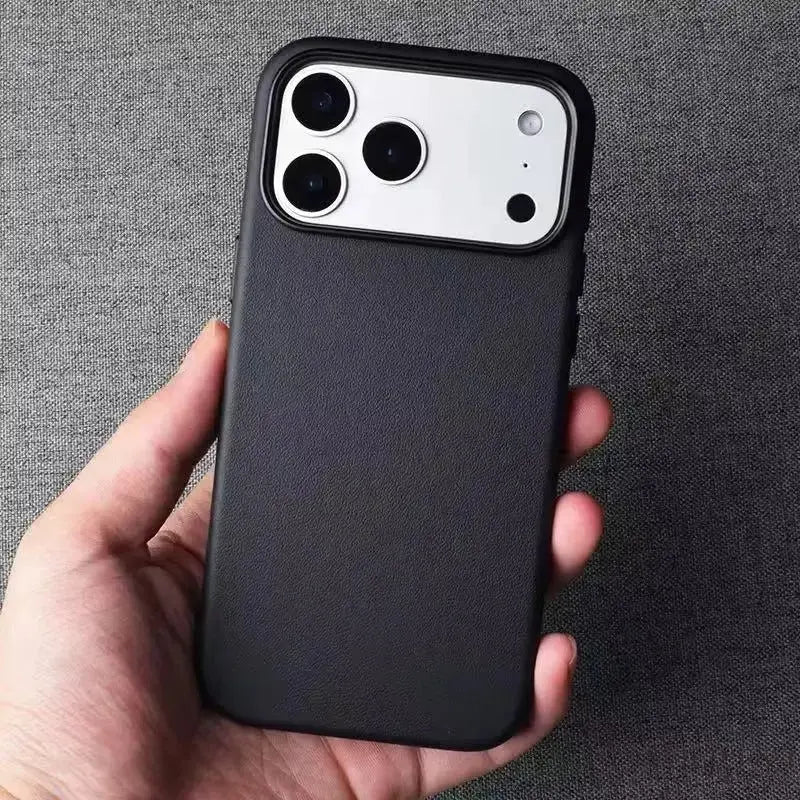
Our Napoli case is named after Naples; it is named after it. We borrowed an idea the city made famous in 1932, when a Neapolitan tailoring house took the padded shoulders and the heavy inner structure out of the English jacket. The case follows the same thought with a smooth Italian Nappa leather, a minimal design and a clean outline.
- Napoli is a name and an idea, not an origin.
- In 1932, London House in Naples made jackets that were unstructured and unlined, without padded shoulders.
- Tailoring has been an organised trade in Naples since 1351, when the tailors' brotherhood was founded.
- Nappa is a smooth, soft, fine-grained leather that ages slowly and quietly.
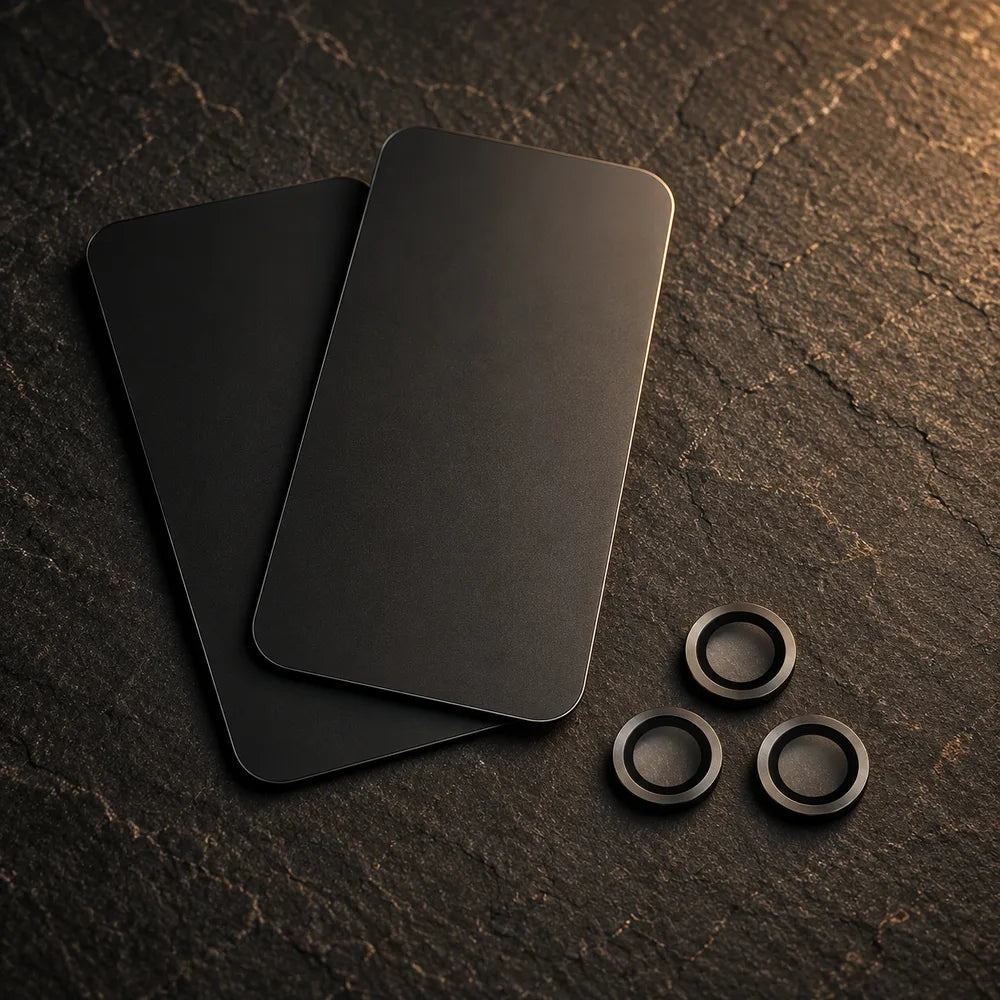
- The Napoli case: Italian Nappa over a high-strength PC core, MagSafe-ready, with a metal camera frame.
What happened to the jacket in Naples in 1932?
In 1932, Gennaro Rubinacci opened a tailoring house called London House at Via Gaetano Filangieri 25, in Naples. The name was a tribute to English cloth. The jackets were not English at all.

They were unstructured and unlined, meant to be worn outside the office. Among the first clients were Vittorio De Sica and Curzio Malaparte. In 1963 the house took the family name, Rubinacci.
Accounts of that year also credit the tailor Vincenzo Attolini. What made the Neapolitan jacket new was an absence: no padded shoulders, and none of the heavy internal structure of the English model. Attolini, who died in 1971, made light jackets without shoulder pads. One Neapolitan history sums them up as "imperfect clothes for imperfect bodies".
The lesson is easy to miss because it is invisible. Nothing was added. Things were removed, and the jacket began to move with the body.
What is a spalla camicia, and why are the folds on purpose?
Spalla camicia means "shirt shoulder". The sleeve is set into the armhole the way a shirt sleeve is, with no padding inside, so the shoulder follows the line of the body.

The sleeve is cut slightly wider than the armhole, so small folds form where the two meet. This is called manica a mappina, after the mappina, a kitchen cloth. The folds give the arm freedom and the shoulder a natural look. They are deliberate: not a flaw, and not an oversized cut.
We are not in the business of jackets. What interests us is the habit of mind: let the material and the cut do the work, and leave out whatever only looks impressive.
How long has Naples been a city of tailors?
For a very long time. The Confraternita dei Sartori, the tailors' brotherhood, was founded in 1351 in the church of Sant'Eligio. That is almost seven centuries of an organised trade.
The unstructured jacket is much younger, and the two should not be blurred together: one is a trade, the other a single idea within it.
The city's elegant side is usually placed in Chiaia. On the Riviera di Chiaia, in 1914, Eugenio Marinella opened a shop of twenty square metres. He wanted it to be "a small corner of England in Naples". In the 1980s, President Cossiga made its silk ties an official gift to heads of state, and the house is still run by the Marinella family. A small room that outlasted a century is a very Neapolitan kind of permanence.
Why is coffee in Naples small, and never in plastic?
Because the coffee is not really the point. In Naples it is a social moment, a reason to talk, rather than fuel for work. The ritual is precise: water first, then a coffee served very hot, in ceramic. A small tip for the barista is a common thank-you.
At home, the classic pot was the cuccumella, the Neapolitan flip coffee maker. It became famous through a scene in Eduardo De Filippo's play Questi fantasmi (1946), in which he covers the spout with a paper cone to keep the aroma in.
Then there is the caffè sospeso, the "suspended" coffee. You pay for two and leave one for someone who needs it. Since 2011 it has had its own day, 10 December. It is a gesture of solidarity, not a promotion, and a small habit that has lasted.
What else does Naples keep?
Naples is precise about what it keeps.
- The art of the pizzaiuolo. In 2017, UNESCO inscribed the "Art of Neapolitan 'Pizzaiuolo'". What is recognised is the know-how, not the pizza itself: four phases, from the dough to baking in a wood-fired oven, with a rotating movement by the baker.
- The sfogliatella. It was born in the monastery of Santa Rosa, in Conca dei Marini, in the province of Salerno. In 1818, Pasquale Pintauro reshaped it like a shell and began selling it on Via Toledo, where his shop is still open. Naples did not invent it. Naples gave it its form.
- San Gennaro. Three times a year, in the Cappella del Tesoro of the Duomo, the rite of the liquefaction of the saint's blood takes place: on the Saturday before the first Sunday of May, on 19 September and on 16 December. Tradition links the December date to the eruption of Vesuvius in 1631.
| Year | What Naples started | What it shows |
|---|---|---|
| 1351 | The tailors' brotherhood, at Sant'Eligio | A trade organised for almost seven centuries |
| 1818 | Pintauro's shell-shaped sfogliatella, on Via Toledo | Refining rather than inventing |
| 1914 | Marinella's twenty-square-metre shop in Chiaia | Small and permanent |
| 1932 | London House and the unstructured jacket | Elegance by removal |
| 2011 | A day for the caffè sospeso | A small habit that lasts |
| 2017 | UNESCO recognition of the pizzaiuolo's art | Protecting the know-how, not the product |
What does Naples have to do with a leather phone case?
What we took from the city is the idea from 1932: remove what is not needed and let the material carry the piece.
Nappa works in that spirit. There is no heavy wax that shifts colour, and no dramatic grain to look at. The surface is smooth, fine-grained and even. The quality is in the hand: how soft it feels, how it sits in your palm. Like an unpadded shoulder, you notice it more by touch than by sight.
One honest footnote. The word Nappa is usually traced to Napa, in California, not to Naples. The closeness of the two names is a coincidence we enjoy, not a claim we make.
What is the Napoli case made of?
Three layers:
- Outside: Italian Nappa leather, smooth and supple.
- Structure: a high-strength PC core, with reinforced corners designed to absorb everyday impacts.
- Inside: a soft microfibre lining that helps reduce micro-scratches.
A metal camera frame gives the lenses a sharp surround, and raised edges help keep screen and lenses off rough surfaces. The case is MagSafe-ready, so chargers and magnetic accessories snap on and stay aligned without extra bulk. Our guide to leather cases and MagSafe explains how that works through leather.
Is a Nappa case right for you?
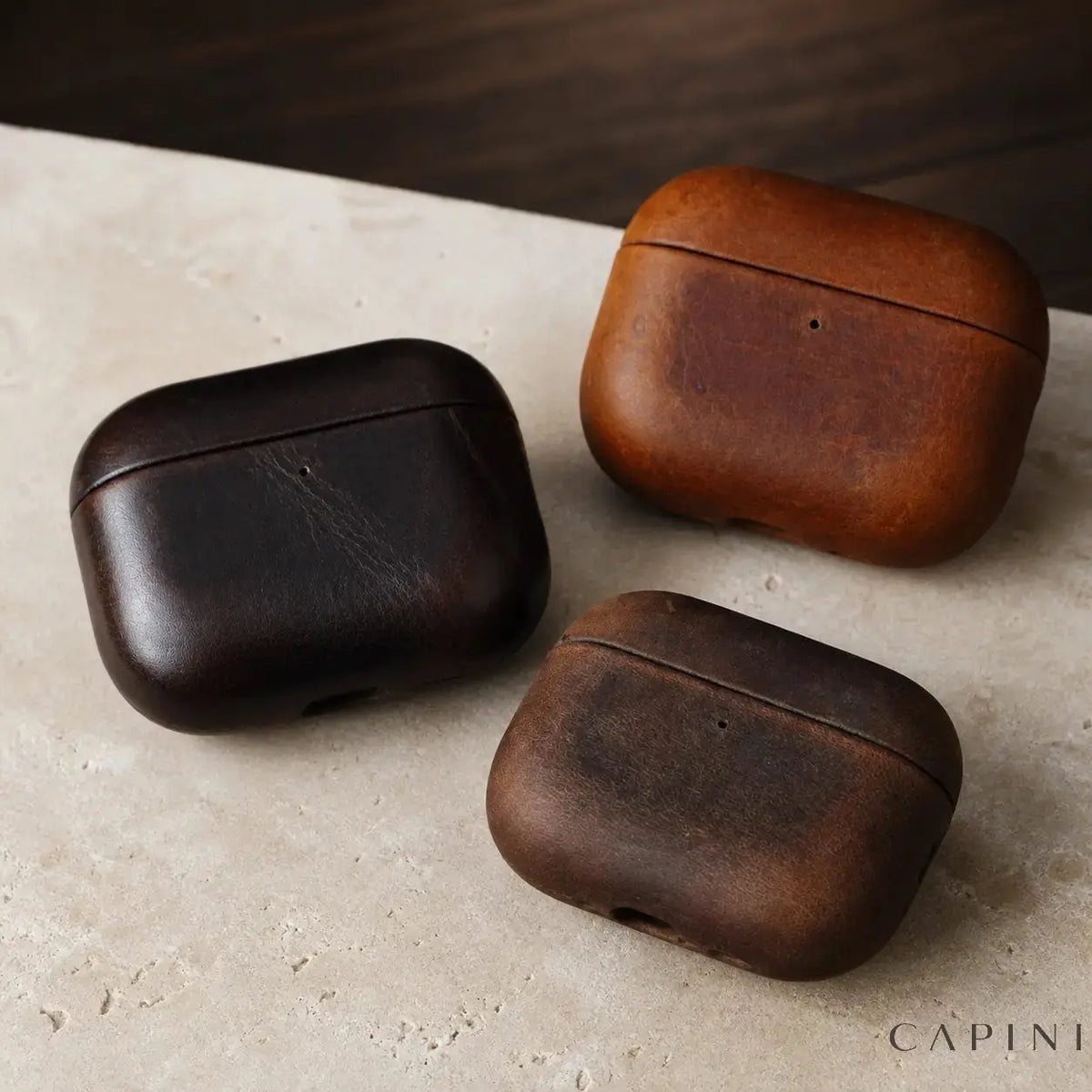
Some people want a case that changes fast. Others want one that stays close to the day it arrived. Nappa is for the second group. In the table below, Crazy Horse is a finish, not the animal: the hide is cow, worked with a heavy wax that lightens where the leather bends.
| Leather | Feel | How it changes | Scratches | Care |
|---|---|---|---|---|
| Nappa (Napoli) | Smooth, soft, even | Slowly and discreetly | Stay visible; leave them | Soft dry cloth |
| Crazy Horse (Ferrara) | Waxy, with character | Fast; lightens where it bends | Often blend in with warmth and use | Soft dry or slightly damp cloth |
| Pull-Up (Parma) | Oiled, matte | Darkens where you hold it | Often soften with warmth | Soft dry or slightly damp cloth |
Choose Napoli if you dress quietly, prefer a smooth surface to a textured one, and use MagSafe every day. Choose a waxed or oiled leather if you want the case to look lived-in within weeks; the story of Ferrara is that opposite temperament, in the same series. Our guide to the leathers we use compares all of them.
Care is simple, and the common mistake is doing too much. Wipe gently with a soft, dry cloth, and avoid alcohol and harsh cleaners. Do not try to oil away a scratch on a smooth surface: you can end up with a darker patch that is harder to live with than the mark. Our care guide covers every finish.
See Napoli next to the other leathers in our iPhone cases.
Frequently asked questions
Why is it called Napoli?
Because of an idea Naples made famous in 1932: elegance by removal. The case keeps the same restraint: smooth leather, a minimal design, nothing extra.
Is Nappa real leather?
Yes. Nappa is real hide with a soft, smooth, fine-grained finish. It is not a synthetic.
Does the Napoli case work with MagSafe?
Yes. It is MagSafe-ready, for chargers and magnetic accessories.
Will Nappa develop a patina?
Slowly and discreetly. It changes far less than Crazy Horse or Pull-Up leather, so it looks much the same next year.
Written by the Capini Firenze team. We work with these leathers every day and update this guide when our materials change.

Leave a comment
This site is protected by hCaptcha and the hCaptcha Privacy Policy and Terms of Service apply.