















Every year on 13 September, at eight in the evening, a procession leaves the basilica of San Frediano in Lucca and walks to the cathedral of San Martino by the light of small candles. The electric lights of the old town are switched off. The city takes part, watches and follows.
Our Lucca Oil-Wax phone case is named after this city. Named after it, not made there. Lucca gives the case a name and an idea: protection that stops feeling like protection and becomes part of the day, the way its walls became a place to walk.
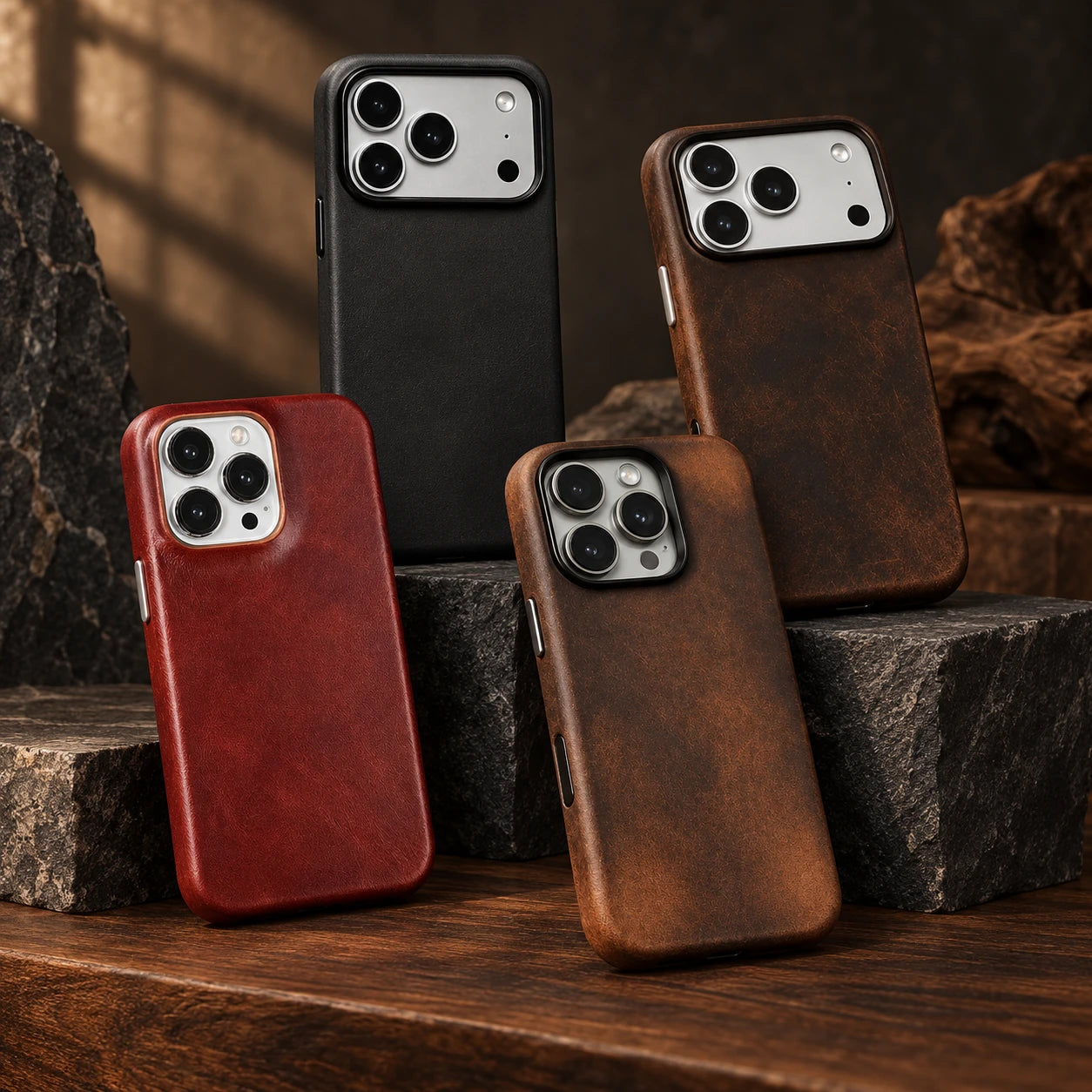
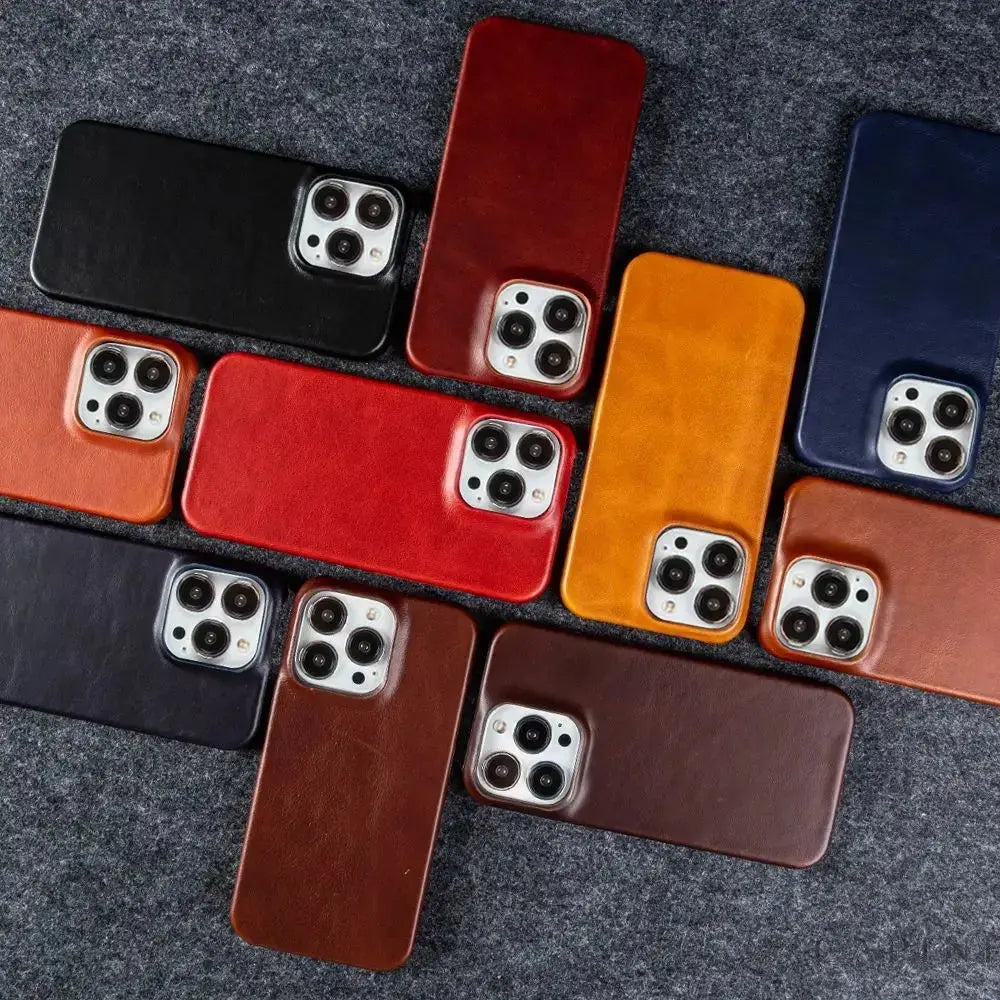
The Lucca Oil-Wax case is named after Lucca, the walled city whose Renaissance walls, begun formally in 1513, are now a public promenade, and where Giacomo Puccini was born in 1858. The city is the name, not the origin. The case is full-grain cowhide with an oil-wax finish on a slim half-wrapped shell, in eight colours, and it softens and deepens with use.
- Lucca names the case. The city gives it a name and an idea, not an origin.
- Lucca's present walls are Renaissance, not medieval. Work on them began formally in 1513.
- The walls are open to everyone, with a tree-lined walk laid out on top in the 19th century.
- Every 13 September, the Luminara di Santa Croce crosses the old town by candlelight, with the electric lights off.
- Giacomo Puccini was born in Lucca on 22 December 1858 and left for Milan in 1880.
- The case: full-grain oil-wax cowhide, raised edges, microfibre lining, wireless charging through the case.
Why does Lucca have walls you can walk on?
Because the city turned its defences into a promenade. The walls you see today are the third circuit around Lucca. The city's official tourism site says their construction began formally in 1513, when the Offizio sopra le Mura, the office in charge of the walls, was set up.

Today the whole circuit can be walked, and access is free. On top of the walls runs a tree-lined promenade laid out in the 19th century, with gardens on the bastions. Numerous stairs and ramps lead up from the inner side.
The official guide has a neat way to give their length: exactly one tenth of a marathon. That detail inspired the Lucca Marathon, a race held in October that starts from the walls.
Lucca was walled long before 1513. The same official guide says the city was born walled in the 2nd century BC, with four gates where its two main Roman streets crossed. Those earlier walls are a different story. The circuit people walk on today is Renaissance, not medieval.
Why does Lucca switch off its lights on 13 September?
To honour the Volto Santo. The Volto Santo, the Holy Face, is a wooden crucifix, not a statue. Legend says it came from the Holy Land on an ox cart. It is sacred to the city, and we write about it with that in mind.

Every year on 13 September, the city honours it with the Luminara di Santa Croce. The procession sets off at 8 pm from the basilica of San Frediano and ends at the cathedral. With the electric lights switched off, the procession moves through the old town by the light of small candles. At the end comes the Mottettone, a piece composed every year by Lucchese musicians. On 14 September there are masses and the fairs of Borgo Giannotti.
The 2026 Luminara carried extra weight. The programme, published with the Archdiocese of Lucca, marked the return of the Volto Santo after its restoration.
Was Puccini born in Lucca?
Yes. Giacomo Puccini was born in Lucca on 22 December 1858, in his family's house in via di Poggio. A plaque on the house reads "Qui nacque il 22 Dicembre 1858 GIACOMO PUCCINI", here was born Giacomo Puccini. The city placed it on 29 December 1924, thirty days after his death.

He spent his childhood and youth there. The Puccini Festival records that he entered Lucca's Istituto Pacini in 1874 and left for Milan in 1880, with a Messa di gloria behind him. So Lucca is where Puccini began, not where he spent his life.
His best-known operas opened elsewhere. Edgar premiered at La Scala in Milan on 21 April 1889, La Bohème at the Teatro Regio in Turin on 1 February 1896, and Tosca at the Teatro Costanzi in Rome on 14 January 1900.
| Date | What happened |
|---|---|
| 2nd century BC | Lucca is founded as a walled city |
| 1406–1410 | Jacopo della Quercia carves the tomb of Ilaria del Carretto |
| 1513 | Work on the present walls formally begins |
| 19 February 1743 | Luigi Boccherini is born in Lucca |
| 22 December 1858 | Giacomo Puccini is born in via di Poggio |
| 1880 | Puccini leaves Lucca for Milan |
| 1966 | First edition of what is now Lucca Comics & Games |
| 1998 | First Lucca Summer Festival, in Piazza Napoleone |
What else is Lucca known for?
Music, marble and a festival with sixty years behind it.

- Boccherini. The composer Luigi Boccherini was born in Lucca on 19 February 1743 and died in Madrid on 28 May 1805. His famous Minuet comes from the Quintet no. 5 of his op. 13.
- Ilaria del Carretto. Paolo Guinigi, lord of Lucca from 1400 to 1430, commissioned this marble tomb from Jacopo della Quercia for his second wife, who died at 26 in childbirth. It was carved between 1406 and 1410 and stands in the sacristy of San Martino. The cathedral museum notes that it never held her body. It inspired D'Annunzio, Quasimodo and Pasolini.
- Lucca Comics & Games. Born in 1966, it marked sixty years in 2026, with an edition from 28 October to 1 November and 700 exhibitors from around the world. It is an institution of the city, and it is treated as one.
- Summer music. The Lucca Summer Festival has been held in Piazza Napoleone since 1998.
What do city walls have to do with a phone case?
Not the making. The Lucca Oil-Wax case is not made in Lucca, and its leather does not come from there. Oil-wax describes the finish of the leather, not where it is from.

What we borrowed is what Lucca did with its walls. They were built to protect the city. Over time they became a public promenade, a place to walk rather than a line of defence.
A good everyday phone case should work the same way. It protects, but after a week you stop noticing it. It just becomes the way your phone feels in your hand, and over the months it takes on the marks of how you use it.
What is the Lucca Oil-Wax case made of?
Full-grain cowhide with an oil-wax finish. Oil-wax leather has oils and waxes worked into it during finishing. It usually has a smoother surface and a soft sheen, where Crazy Horse, a more heavily waxed finish, is matte. It also changes more gently. Our leather guide compares the finishes side by side.

These are the facts from the Lucca product page:
- Leather: 100% full-grain cowhide with an oil-wax finish, smooth in the hand, with natural grain and slight shade differences.
- Shape: a slim half-wrapped shell that follows the curves of the iPhone without adding bulk.
- Edges: slightly raised around the screen and the camera, to help guard against everyday scratches.
- Inside: a soft microfibre lining to reduce micro-scratches on the back of the phone.
- Grip: a matte, non-slip leather surface.
- Charging: supports wireless charging with the case on.
Because it is full-grain, no two cases are quite the same. Our guide to full-grain vs top-grain vs genuine leather explains why that layer matters.
How do you choose and care for it?
Start with your model. The Lucca Oil-Wax case comes for iPhone models from the iPhone XS Max and iPhone 11 to the iPhone 18 Pro and 18 Pro Max. Not every model in between is listed, so check yours in the selector on the product page. Our guide on which case fits my iPhone helps if you are unsure.

Then choose a colour. There are eight: Wine Red, Light Brown, Dark Brown, Coffee, Yellow, Blue Grey, Navy and Black. With an oil-wax finish, the colour you choose on day one is a starting point. Regular use softens the leather and deepens the patina. Our article on leather patina explains how it forms.
Care is short. Avoid alcohol and aggressive cleaners. Wipe gently with a soft dry or slightly damp cloth and let it dry naturally. For more, read how to care for a leather phone case.
A half-wrapped shell is light and slim. If drops are your main worry, read whether a leather case protects an iPhone from drops before you choose.
See our best sellers and the iPhone 18 cases. For another town in this series, read Ivrea, the town that made technology personal.
Frequently asked questions
Why is the case called Lucca?
After the city of walls, candles and Puccini. Lucca gives the case a name and an idea, not an origin.
Does the Lucca case come from Lucca?
No. The city gives the case its name. The case is not made there, and its leather does not come from there.
Is the Lucca Oil-Wax case real leather?
Yes. It is 100% full-grain cowhide with an oil-wax finish.
What does oil-wax mean?
It is a finish. Oils and waxes are worked into the leather, which gives a smooth surface with a soft sheen that deepens and softens with use.
Can I charge my iPhone wirelessly with the case on?
Yes. The product page says it supports wireless charging with the case on.
Are Lucca's walls medieval?
No. The present walls are Renaissance. Work on them began formally in 1513, and they are now a public promenade.
Written by the Capini Firenze team. We work with these leathers every day and update this guide when our materials change.

Leave a comment
This site is protected by hCaptcha and the hCaptcha Privacy Policy and Terms of Service apply.